
HVAC Repair Near Bur Dubai
Bur Dubai sits right along Dubai Creek, and the buildings here tell the story. You’ve got the old souk area with its low-rise blocks, the apartment towers near Al Fahidi metro, and the mixed commercial spaces on Khalid Bin Al Waleed Road. What they all share is one problem: the AC works overtime from April to October, and when it breaks, the heat doesn’t give you a break.
We’ve been fixing ACs around Bur Dubai long enough to know the patterns. The older buildings near the creek? Their ducting is often original from the 90s, metal ducts that have corroded at the joints. The newer towers? Builder-grade units that start showing issues in year three. And the sand — everyone forgets about the sand. It gets into outdoor condensers, clogs filters in weeks instead of months, and wears down fan motors faster than almost anywhere else in Dubai.
What Actually Goes Wrong With ACs Here
Every summer we see the same set of problems, and they almost always start small. A split unit in an Al Fahidi apartment starts blowing warm air around mid-July. Owner thinks it needs gas. Half the time it’s not the refrigerant — it’s the condenser coils caked in dust so thick you can’t see the fins. Clean the coils, check the charge, and it’s back to 18 degrees. But if you just top up the gas without cleaning, you’re back in the same spot in three weeks.
Then there’s the water dripping from indoor units. In Bur Dubai’s humidity — especially August and September when it hits 90% — condensate lines clog with algae and dust mix. The pan overflows, water runs down the wall, and by the time you notice the stain, the gypsum is soft. We’ve opened up units where the drain line was completely blocked with a black sludge that took a full flush to clear. Prevention is a 10-minute clean during service. Cure is a wall repair.
Compressor failures are the expensive ones. Usually happens to units that have been running low on refrigerant for months. The compressor works harder, overheats, and eventually seizes. A new compressor for a standard split unit runs 800-1200 dirhams plus labour. The refrigerant leak that caused it? Often a simple braze joint on the outdoor unit that takes 20 minutes to fix if caught early. That’s the difference between a 200 dirham call and a 1500 dirham replacement.
The Sand Problem Nobody Talks About
Bur Dubai’s location near the creek doesn’t protect it from sand. The wind carries fine dust from the desert, and it settles everywhere. Outdoor condenser units are the worst hit. The fins on the coils get coated, airflow drops, pressure rises, and the system starts cycling on high pressure cutout. You hear the compressor start, run for two minutes, stop, wait five minutes, start again. That’s not normal — that’s the unit suffocating.
We clean outdoor units with a foaming agent and low-pressure water. High pressure bends the fins, which makes the problem worse. After cleaning, we check the amp draw on the compressor. If it’s running 15-20% above rated current, the unit is still struggling — either from remaining blockage or from wear. That’s when we tell the owner: clean it now, or plan for a compressor replacement next summer.
Indoor filters are another sand trap. In Bur Dubai, we tell clients to check filters every three weeks during summer, not every three months. A clogged filter reduces airflow, freezes the indoor coil, and when the ice melts you get water damage. It’s a 30-second check that saves a 500 dirham service call.
What Happens When You Call Us
First, we ask what the unit is doing — not what you think is wrong. “Not cooling” can mean ten different things. Is the indoor fan running? Is the outdoor unit making noise? Is there water dripping? When did it last work properly? These questions save us both time. If the outdoor unit isn’t running at all, we’re looking at electrical: capacitor, contactor, or breaker. If it’s running but blowing warm, we’re looking at refrigerant or airflow. Different paths, different tools.
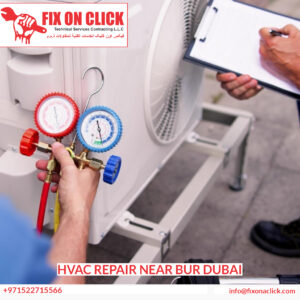
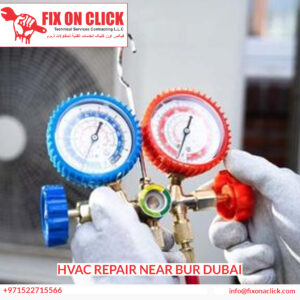
When we arrive, we start with the basics. Check the filter, check the thermostat setting (yes, people accidentally switch to heat mode), check the breaker. Then we move to pressure gauges if needed. A properly charged R410A system runs around 120-150 psi on the low side in summer. If it’s at 80 psi, you’ve got a leak or a restriction. If it’s at 200 psi, you’ve got a blockage or a failing compressor. The numbers tell the story.
We carry capacitors, contactors, fuses, and refrigerant in the van. Most common repairs happen on the spot. For compressor replacements or major refrigerant leaks, we give a clear quote before starting. No surprises, no hidden charges. And we clean up after — we’ve worked in enough Bur Dubai apartments to know space is tight and mess isn’t welcome.
Emergency Repairs — When the AC Dies at 2 PM in August
ACs don’t fail on schedule. They fail when the load is highest — mid-afternoon in July, when it’s 45 outside and the unit has been running non-stop for six hours. That’s when capacitors blow, contactors weld shut, and compressors overheat. We’ve had calls from families with young kids, from restaurants with walk-in coolers going warm, from shops where the stock is heat-sensitive.
Our emergency team covers Bur Dubai around the clock. When you call, we ask the same diagnostic questions to gauge urgency. If it’s a complete electrical failure — no power to the unit, burning smell from the panel — we treat it as priority. If it’s reduced cooling but still running, we schedule for same-day but not emergency rates. Fair is fair.
We aim to be on-site within 90 minutes for emergencies in Bur Dubai. The van carries replacement capacitors for common brands — Daikin, Carrier, Gree, Mitsubishi — plus charging gear, leak detection dye, and electrical testing tools. Most emergency calls are fixed in one visit. The ones that aren’t? We tell you upfront what parts we need to order and how long it takes.
Split Units, Window Units, Central Systems — We Work On All Of Them
Bur Dubai has a mix of systems depending on the building age. The older apartments near the creek often have window units or early split systems. The newer towers have multi-split setups with one outdoor unit feeding three or four indoor heads. The commercial spaces — restaurants, shops, small offices — usually have ducted splits or package units on the roof.
Window units are straightforward but finicky. The compressor and fan share a shaft, so when the bearings wear, both go. We see this in units that have been running 10+ years. Sometimes it’s worth repairing, sometimes the unit is so inefficient that replacement saves money on electricity within two summers. We run the numbers and tell you honestly.
Central systems in larger buildings need different attention. The ducting is the weak point — leaks at joints, insulation falling off, dampers stuck. We’ve traced cooling problems back to a single stuck damper that was sending all the cold air to an empty storage room while the office got nothing. Duct inspection isn’t glamorous, but it solves problems that refrigerant charging won’t touch.

Keeping Your AC Alive Longer
The units that last 15 years instead of 8 have one thing in common: regular cleaning. Not just filter cleaning — coil cleaning, drain line flushing, electrical connection tightening. A loose connection generates heat, heat degrades insulation, and degraded insulation causes shorts. It’s a slow death that annual maintenance prevents.
For Bur Dubai specifically, we recommend pre-summer service in April and post-summer check in October. The pre-summer service cleans everything before the heavy load hits. The post-summer check catches wear that happened during peak season — worn capacitors, weak contactors, refrigerant leaks that started small. Fix them in October, and you’re ready for next year.
We also check refrigerant charge during maintenance. A unit that’s 10% low on refrigerant will still cool, but the compressor works harder and uses 15-20% more electricity. Over a Dubai summer, that’s 300-500 dirhams extra on your DEWA bill. A proper charge pays for the service call.
Quick Questions We Get All The Time
Why is my AC blowing warm air?
Most common causes: dirty filter, low refrigerant, or outdoor unit not running. Check the filter first — if it’s grey instead of white, that’s your problem. If the filter is clean and the outdoor unit is silent, call us. It’s likely electrical or refrigerant.
How often should I service my AC in Bur Dubai?
Every 3-4 months during summer. The sand and dust here clog filters and coils faster than other areas. A 10-minute filter check every three weeks saves you from bigger problems.
My AC is dripping water inside. Is this serious?
It can be. The condensate drain is probably blocked, causing the overflow pan to fill. Left alone, it damages walls and can affect electrical outlets nearby. It’s a quick fix if caught early — usually just a drain flush.
Should I repair or replace my old AC unit?
If it’s over 10 years, needs refrigerant every summer, or your electricity bill keeps climbing, replacement usually makes sense. New inverter units use 40-50% less power. We can run the payback calculation based on your actual usage.
Do you handle emergency repairs at night?
Yes. We cover Bur Dubai 24/7. Emergency rates apply after hours, but we tell you the price before we come out. No surprises.
If your AC isn’t keeping up, making strange noises, or just not right, give us a call. We’ll come out, diagnose it properly, and tell you exactly what needs doing — whether it’s a 20-minute clean or a full compressor replacement. No upsell, no jargon, just honest work from people who know Bur Dubai’s ACs inside out.