
Professional Curtain Installation Services in Dubai
Curtains do more than cover a window. Installed correctly, they control light, add privacy, improve acoustics, and define how a room feels — from the ceiling height down to the floor line. Fix On A Click carries out curtain installation across all of Dubai, covering residential villas and apartments, offices, hotel rooms, and commercial properties of all sizes and styles.
Most curtain installation problems come down to one of three things: incorrect measurements, the wrong hardware for the fabric weight, or rod placement that is too low. A rod hung 10 centimetres above the window frame instead of near the ceiling makes the same room feel noticeably smaller. These are the details that matter and the ones we get right on every job. Our team measures carefully, sources the appropriate hardware, and installs everything so the fabric falls, folds, and operates the way it should.

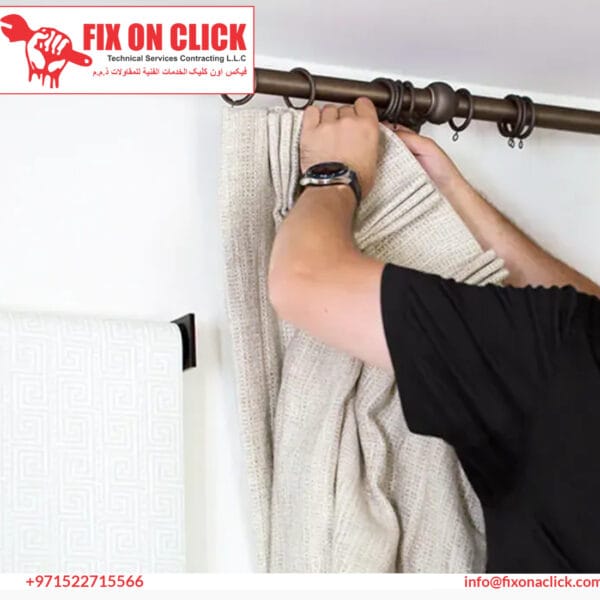
What Curtain Installation Actually Involves
A curtain installation job is not simply drilling two brackets and sliding a rod through fabric loops. Done properly, it involves measuring the window width and height, deciding on rod placement relative to the ceiling, selecting the right bracket type for the wall material, choosing hardware that matches the curtain weight, and ensuring the finished result hangs level and operates correctly.
We attended a villa in Jumeirah last year where a homeowner had attempted to install floor-to-ceiling drapes using standard wall plugs in a plasterboard partition. Both brackets pulled out of the wall within three days under the weight of the fabric. The correct fixing for that wall type and fabric weight was a toggle bolt rated for at least 8 kilograms per bracket. That is the kind of knowledge that separates a correct installation from one that fails. We identify the wall type before any drilling begins and use the right fixings for the load.
Fix On A Click handles all curtain types: pinch pleat, eyelet, tab top, wave track, pencil pleat, and ceiling-mounted track systems. Each style requires a different approach to hardware selection, rod or track placement, and fabric alignment. We are familiar with all of them.
Common Mistakes
That Ruin Curtain Installations
Most curtain installation problems are avoidable. Understanding what goes wrong — and why — explains exactly why correct installation technique matters from the start.
Rod Placed Too Low
Hanging a curtain rod directly above the window frame rather than near the ceiling is the single most common installation mistake. The visual effect is a shorter, heavier-looking room. Ceiling-height rod placement — typically 10 to 15 centimetres below the ceiling — creates the illusion of height and makes the same room feel noticeably more spacious. It costs nothing extra. It is purely a matter of knowing where the rod belongs.
Insufficient Rod Width
A rod that extends only to the window frame edges means the curtain fabric covers part of the glass even when the curtains are fully open, reducing natural light. Rods should extend 15 to 25 centimetres beyond the window frame on each side so the curtain stack clears the glass completely when open. This is a measurement decision made before any drilling begins, and getting it wrong means repositioning every bracket.
Brackets Not Level
Brackets installed even 3 to 4 millimetres out of level produce a visibly tilted rod and an uneven curtain hem. This is particularly obvious on floor-length curtains where the gap between fabric and floor varies across the width of the window. Professional installation uses a laser level or spirit level on every bracket to confirm alignment before any fixing is tightened.
Wrong Fixings for Wall Type
Dubai properties use a variety of wall constructions: concrete, hollow block, plasterboard, and GFRC panels. Each requires a different fixing type. Standard plastic wall plugs in plasterboard cannot hold the weight of heavy drapes and will pull out over time. Toggle bolts for hollow walls, chemical anchors for block, and concrete screws for solid walls are the correct approach. Using the wrong fixing type is the main reason brackets fail weeks after installation.
Hardware Mismatched to Fabric Weight
A thin decorative rod rated for lightweight sheers will bow or deflect under the weight of heavy blackout velvet. Equally, heavy industrial track hardware looks out of place under delicate linen panels. The rod or track diameter, bracket spacing, and fixing load rating all need to match the specific fabric weight being hung. Getting this wrong leads to visible rod sag across wide windows and premature hardware failure.
Incorrect Curtain Length
Curtain length is not simply floor-to-ceiling measurement minus the rod height. The heading style adds height above the rings or hooks, the fabric requires a break at the floor for most styles, and some heading types gather fabric differently depending on the pleat or eyelet spacing. Getting the length wrong by 5 to 8 centimetres in either direction produces curtains that look cut short or pool excessively on the floor in a way that was not intended.
Uneven Pleat or Ring Spacing
Pinch pleat, pencil pleat, and eyelet curtains require consistent spacing across the full fabric width. Uneven spacing creates irregular folds that look messy even when the curtain is closed and becomes more obvious as the fabric ages and the fold lines become permanent. Spacing is set before the curtain is hung and is difficult to correct without re-heading the fabric.
Blocking Doors or AC Vents
Curtains that are too wide, placed on the wrong wall, or hung without accounting for furniture and fixture positions end up obstructing doors, AC supply grilles, or light switches. This is a planning issue that should be resolved during the measurement stage. We identify any obstructions before installation begins and adjust placement, rod length, or fabric width accordingly.
Why Professional Installation Produces Different Results
The difference between a professionally installed curtain and a DIY job is visible immediately. It shows in how evenly the fabric falls, how straight the rod sits, and how well the hardware holds over months of daily use. Most people who have attempted to install curtains themselves — particularly heavy floor-to-ceiling panels — will know that what looked straightforward on a YouTube video took three times as long, left unwanted holes in the wall, and still did not look quite right. The reason is not lack of effort. It is that curtain installation requires precision tools, knowledge of wall types and fixing loads, and understanding of how different heading styles hang at different fabric weights.
We installed curtains in a business bay serviced apartment last month where the previous installer had used self-adhesive hooks on a tiled feature wall rather than drilling. The hooks failed within two weeks. The correct approach for that wall was a 6mm masonry bit and stainless anchor bolts. Two hours of correct work replaced three weeks of failed DIY attempts. That is the nature of this job.
Precision Measurement Before Anything Else
We measure window width, wall clearance, ceiling height, and any obstructions before a single bracket position is marked. The difference between a well-measured and poorly measured installation is visible in every fold of the finished curtain.
Right Tools for the Job
Laser levels for bracket alignment, hammer drills for concrete walls, toggle bolt drivers for plasterboard, and torque-rated screwdrivers to avoid over-tightening brackets into softer wall materials. These are not tools most households own, and they are the reason professional results look the way they do.
All Curtain Types and Heading Styles
Pinch pleat, eyelet, pencil pleat, tab top, wave, and goblet heading styles each hang and operate differently. Track systems, ceiling-mounted rails, and tension rods all have specific installation requirements. We are familiar with every combination and know what each requires before the job starts.
Long-Term Stability
Brackets installed correctly with appropriate fixings for the wall type hold for years. Brackets installed incorrectly — particularly in the hollow-block and plasterboard walls common in Dubai apartments — fail within months under the weight of repeated curtain operation. We do not leave until every bracket is load-tested and confirmed secure.
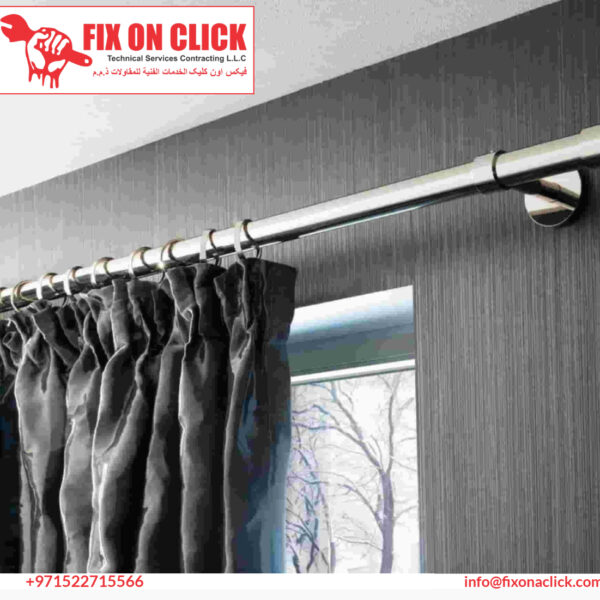
Curtain Types
We Install Across Dubai
Different heading styles, track systems, and fabric weights each require a specific installation approach. We handle all of them.
Eyelet Curtains
Metal rings punched directly through the fabric heading slot onto the rod. The fold pattern is fixed by the eyelet spacing. Rod diameter must fit through the eyelet opening — typically 25mm to 50mm. A clean, contemporary look common in Dubai apartments and modern villas.
Pinch Pleat Curtains
Fabric gathered into groups of two or three pleats at regular intervals, held with a hook. Produces a structured, formal drape suited to traditional interiors and hotel rooms. Pleat spacing must be calculated against the total fabric width and the intended stack position when open.
Pencil Pleat Curtains
A continuous heading tape creates tight, uniform pleats across the full width. Versatile enough for both formal and relaxed interiors. Gather ratio — typically 2 to 2.5 times the track width — must be set before hanging so pleats distribute evenly.
Wave / S-Fold Curtains
Fabric hangs in continuous even waves using a specialised track with carriers at fixed spacing. The wave size is determined by carrier spacing and fabric fullness. Requires a ceiling-mounted or wall-mounted wave track rather than a standard rod — installation is more involved but the finished result is clean and contemporary.
Tab Top Curtains
Fabric loops sewn directly to the heading slide over the rod. Simple and casual in appearance. Tab length determines how far the top of the curtain sits below the rod, so rod placement must account for this gap when calculating effective curtain height.
Ceiling Track & Corded Systems
Tracks mounted flush to the ceiling create a seamless floor-to-ceiling effect. Corded or motorised operation is common in larger rooms and commercial properties. Track length, number of carriers, and ceiling fixing points all need precise planning before installation begins.
How It Works — Our Installation Process
Every curtain installation follows the same structured approach from measurement to final check, so nothing is left to chance on site.
Contact Us
Call or WhatsApp with your property type, number of windows, and curtain style if known. We use this to arrive prepared with appropriate hardware options.
Site Measurement
We measure window widths, ceiling heights, wall clearances, and identify any obstructions. Wall type is confirmed before any bracket positions are marked. Rod placement height is agreed before drilling begins.
Hardware Selection
The appropriate rod or track, bracket type, and fixing hardware are selected based on wall material and fabric weight. This stage prevents the majority of installation failures before they happen.
Precise Installation
Brackets are levelled using a laser level, drilled to the correct fixing type for the wall, and load-tested before the rod is seated. Every bracket position is confirmed level before the next is marked.
Curtain Hanging & Dressing
Curtains are hung, pleats or folds are set evenly across the heading, and the fabric is dressed so it falls and stacks correctly. Floor clearance and any break length is confirmed against the client's preference.
Final Check & Handover
Every window is checked for level, even fabric fall, and correct operation. You receive a walkthrough of each installation and confirmation of what was used so you have the right hardware information for any future changes.
6 Solid Reasons
To Choose Fix On A Click
Dubai homeowners and interior designers choose Fix On A Click for curtain installation because the results hold up — visually and structurally.
Measurement First, Always
Every job starts with accurate measurement of window dimensions, ceiling height, wall clearances, and obstacles. Rod placement height is agreed before any bracket position is marked. Measurement errors discovered after drilling are expensive to correct.
Correct Fixings for Every Wall Type
We identify the wall material before selecting fixings. Concrete, hollow block, plasterboard, and tiled surfaces each require a different anchor type and diameter. The right fixing for the wall and the load is what keeps brackets in place for years rather than weeks.
All Curtain Types and Systems
Eyelet, pinch pleat, pencil pleat, wave, tab top, and ceiling track systems. We work with all heading styles and all track configurations. You do not need to describe the curtain type in technical terms — we identify it on site and handle it correctly.
Transparent Pricing
The cost is confirmed on site after the job has been assessed. You know what the installation covers before work begins. No surprises are added after the brackets are in the wall. What is agreed is what is charged.
Residential and Commercial
We install curtains in apartments, villas, penthouses, hotel rooms, offices, restaurants, and retail units. Scale and setting do not change the standard of work. Every window is treated with the same care regardless of property type.
All Areas of Dubai Covered
Downtown, Marina, JBR, Palm Jumeirah, JVC, Arabian Ranches, Al Barsha, Mirdif, Business Bay, Silicon Oasis, and every surrounding community. One call and we arrange the visit — no area restrictions and no travel surcharges.
Curtain Installation for Every Type of Space
Different rooms and properties have different requirements. We adapt the approach to suit the space, the usage, and the fabric being installed.
Bedrooms
Bedrooms in Dubai benefit from full-coverage blackout curtains that block out early morning sunlight — which arrives intensely from May through September. Floor-to-ceiling installations with minimal side gaps are the standard we aim for. Rod placement near the ceiling eliminates the light leak common when rods are hung low over the window frame.
Living Rooms
Living rooms often benefit from layered installations: a sheer inner panel for daytime privacy with natural light, and a heavier outer panel for evening coverage. This requires a double rod or double track system, with both layers hanging independently. Achieving the right proportion and stack position with two layers of fabric requires planning before any hardware goes into the wall.
Offices
Commercial offices in Dubai require installations that reduce screen glare without blocking natural light entirely. Sheer or light-filtering panels on ceiling-mounted tracks are typical. The track must allow full retraction to clear the glass during morning hours and smooth operation for staff who open and close curtains multiple times daily.
Hotels & Serviced Apartments
Hotel rooms require durable hardware and blackout coverage that withstands heavy daily use. Corded or motorised track systems are standard in better-grade hotel installations. Fabric must reach from ceiling to floor with no visible light gap at the sides or bottom. We have completed hotel room installations across multiple properties in Dubai and understand the standard required.
Restaurants & Retail
Restaurants need curtains that add ambiance without restricting service flow or obstructing tables near windows. Retail units often use curtains to section spaces or create fitting room privacy. Both settings require hardware that operates smoothly under frequent use and fabric choices that hold up to regular cleaning.
Children's Rooms
Children's bedrooms need reliable blackout coverage for daytime naps and early bedtimes. Hardware must be secured with fixings appropriate for the wall type so there is no risk of the rod or track coming down. We avoid brackets with sharp exposed edges and use child-safe cordless track systems where corded operation is not appropriate.
More Handyman
Services We Provide
Fix On A Click handles a full range of residential and commercial handyman services across Dubai. One team, one call for everything your property needs.
Painting & Touch-Ups
Interior and exterior painting, wall repairs, and touch-up work for residential and commercial properties.
Furniture Assembly
Assembly of flat-pack and ready-to-assemble furniture including wardrobes, beds, shelving, and office desks.
TV & Picture Mounting
Wall mounting for TVs, mirrors, artwork, and shelves. Correct wall anchoring for all wall types including plasterboard and concrete.
Door Lock & Handle Repair
Replacement and repair of door locks, handles, hinges, and door closers for residential and commercial doors.
Tile Repair & Grouting
Cracked tile replacement, regrouting of bathroom and kitchen tiles, and silicone sealing around wet areas.
Blind Installation
Installation of roller blinds, venetian blinds, vertical blinds, and wooden blinds for all window types.
Shelving & Storage
Wall-mounted shelves, floating shelves, and storage unit installation with appropriate fixings for the load and wall type.
Minor Plumbing Repairs
Tap replacements, showerhead installations, toilet seat changes, and minor leak rectification in residential properties.
Frequently Asked
Questions About Curtain Installation
Straightforward answers to what Dubai homeowners and interior professionals most commonly ask about curtain installation.
How much does curtain installation cost in Dubai?
Cost depends on the number of windows, the curtain type and heading style, the wall material, and whether any existing hardware needs removal first. A standard single-window residential installation is priced differently from a full-villa project with layered curtains on ten windows. The confirmed cost is provided on site after the technician has assessed the job. Call or WhatsApp us with the number of windows and curtain type and we will give you an indicative range before the visit.
Where exactly should a curtain rod be positioned?
For most residential installations, rods are positioned 10 to 15 centimetres below the ceiling rather than directly above the window frame. This makes the ceiling appear higher and the room feel more spacious. The rod should also extend 15 to 25 centimetres beyond the window frame on each side so the curtain can fully clear the glass when open, allowing maximum natural light. These two positioning decisions have more visual impact on the finished result than any other aspect of the installation.
How long does a curtain installation job take?
A single window with a standard rod and eyelet or pinch pleat curtains takes approximately 45 minutes to one hour, including measurement, bracket installation, and curtain hanging. A full villa with six to eight windows on a single visit takes 4 to 6 hours depending on the curtain type and any complexity involved. Ceiling track systems take longer than wall-mounted rods due to the additional access and fixing requirements. We give a time estimate once the scope of the job is confirmed.
Do you supply curtain rods and hardware, or only installation?
We primarily provide installation using hardware the client has purchased or we supply on request. If you have already purchased your rods, brackets, and finials, we install them. If you need hardware sourced, let us know the curtain type, approximate window width, and fabric weight and we can advise on appropriate options. Hardware cost is separate from installation cost and is confirmed before the job begins.
Can you install curtains on plasterboard walls?
Yes. Plasterboard walls are common in Dubai apartments, particularly in partition walls and behind feature cladding. The key difference from concrete or block walls is the fixing type: standard plastic wall plugs cannot hold the load of most curtain hardware in plasterboard. We use toggle bolts or snap toggles rated for the specific bracket load. For heavier fabrics or wide windows requiring a centre support bracket, we locate the timber or metal stud behind the plasterboard and fix directly into it where possible, which gives a significantly stronger anchor.
Can you remove and reinstall existing curtains?
Yes. We remove existing hardware, fill and touch up the wall where old fixings have been removed, relocate the brackets to the correct position, and reinstall the curtains. This is a common job during villa handovers and renovations where curtains are being repositioned rather than replaced. If the existing rod and brackets are being reused, we check the condition of the hardware before reinstalling to confirm it is in suitable condition to hold the load again.
What curtain type works best for Dubai's climate?
For bedrooms and west-facing rooms that receive intense afternoon sun from May through September, blackout or thermal-backed curtains are the practical choice. They reduce solar heat gain through the window, which reduces the load on the AC and improves comfort. Sheer fabrics alone do very little to block radiant heat from Dubai's summer sun. For living rooms, a layered approach works well: sheer inner panels for daytime diffused light with a heavier outer panel for evening privacy and morning sun control.
How do I arrange a curtain installation visit in Dubai?
Call or WhatsApp Fix On A Click on +971 52 271 5566. Let us know the number of windows, the curtain type if known, and your location in Dubai. We arrange a visit at a time convenient for you. We cover every area of Dubai and schedule residential visits within 24 to 48 hours of first contact. For larger commercial or multi-unit projects, contact us to discuss scheduling and scope.
Book Your Curtain Installation Today
Whether you have just moved into a new villa, are renovating a bedroom, or need curtains installed in a commercial property, call or WhatsApp Fix On A Click. Describe the number of windows, the curtain type if known, and your location. We arrange a visit at a time that suits you, seven days a week across all of Dubai.
We serve Downtown Dubai, Dubai Marina, JBR, Palm Jumeirah, JVC, Al Barsha, Business Bay, Jumeirah, DIFC, Mirdif, Deira, Bur Dubai, Arabian Ranches, Al Quoz, Dubai Hills, Silicon Oasis, and every community and development across the emirate.
Curtain Installation Across All of Dubai
Don't see your area? We cover every corner of Dubai — call us and we will come to you.