
Water Leak Repair Near Al Rashidiya Dubai
Al Rashidiya sits right between the old charm of Dubai and the practical side of city living. You’ve got the metro station nearby, the park for evening walks, and a mix of older villas and newer apartment blocks. But here’s the thing — the plumbing in this area has seen a lot. Those older villas on the quiet streets? Many still run on original copper piping from the 90s. The newer apartments? Builders sometimes cut corners with PVC joints that loosen up after a few Dubai summers. Either way, water leaks show up when you least expect them.
What a Small Leak Actually Costs You
People always think they’ll “get to it later.” But later comes quick in Al Rashidiya. That damp spot behind the bathroom tiles? In 48 hours, mold starts. In a week, the gypsum board behind it turns soft. In a month, you’re looking at replacing half the wall and possibly rewiring the light switch that got wet.And it’s not just the visible damage. Water finds paths you can’t see — it runs along concrete beams, drips into electrical conduits, and pools under floor tiles. By the time you see a stain on the ceiling, the leak has probably been active for weeks. We’ve opened up walls in villas near Al Rashidiya Park and found entire sections of pipe corroded through, quietly leaking into the foundation for months.Your DEWA bill is usually the first warning. If it suddenly jumps 150-400 dirhams and your usage hasn’t changed, you’ve almost certainly got a leak somewhere. Don’t wait for the ceiling to bubble — that’s already too late.Why Al Rashidiya Properties Leak More Than You’d Think
This area has a unique mix of plumbing ages and styles. The older villas, especially the ones built in the 80s and 90s, often have galvanized steel pipes that rust from the inside out. You don’t see it happening until the water pressure drops or a pipe finally gives way. We’ve replaced entire runs of pipe in villas where the inside diameter had shrunk to a pencil-thick opening from years of rust buildup.The newer apartment buildings have different issues. Builders here often use PVC for drainage and PPR for water lines, which is fine — but the joint work is where problems start. Dubai’s water pressure runs high, sometimes hitting 4-5 bar in Al Rashidiya. That’s a lot of force on a joint that wasn’t glued properly or a fitting that got nudged during installation. Six months after you move in, that joint starts weeping. A year later, it’s a full leak.Then there’s the garden irrigation systems in the villas. Underground pipes get nicked by gardening tools, cracked by tree roots, or damaged when someone installs new landscaping. The leak runs underground for weeks, turning your garden into a soggy patch while your water meter spins. We’ve found leaks in villa gardens where the owner had no idea — they just thought the grass was growing well.How We Find Leaks Without Smashing Your Walls
Back in the day, finding a leak meant breaking tiles and hoping you guessed right. We don’t work like that anymore. Our team carries thermal imaging cameras that pick up temperature differences behind walls — a cold spot in a hot wall means water is running where it shouldn’t. We also use acoustic sensors that listen for the hiss of water escaping a pipe, even through concrete.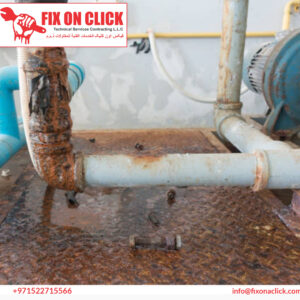
What Happens When You Call Us
First, we ask the right questions over the phone. When did you first notice it? Is the water clean or dirty? Is it constant or only when you run a specific tap? Has your DEWA bill changed? These answers tell us whether we’re dealing with a supply leak, drainage issue, or something else entirely.When we arrive, we start with a walk-around. We check the water meter — if it’s spinning when everything is turned off, that’s your confirmation. We look at stains, listen for hissing, and check under sinks and behind appliances. Then we bring in the detection tools if the source isn’t obvious.Once we find it, we explain exactly what’s wrong and what it’ll take to fix it. No hidden costs, no surprise extras. We carry most common parts in the van — copper fittings, PVC couplings, PPR joints, waterproofing compounds — so most repairs happen on the spot. For bigger jobs, like replacing a full run of pipe, we’ll tell you upfront how long it takes and what it costs.After the repair, we pressure-test the line and run the taps to make sure everything holds. Then we clean up. We’ve worked in enough Al Rashidiya homes to know that nobody wants a mess left behind.Emergency Leaks — We’re There When Pipes Burst
Pipes don’t check the clock before they burst. We’ve had calls at 2 AM from villas where the garden supply line blew and water was flooding the driveway. We’ve had apartments call at 6 AM because the water heater connection gave way and the utility room was ankle-deep. It happens, and when it does, you need someone who can get there fast.Our emergency team covers Al Rashidiya around the clock. When you call, we ask if you can shut off the main valve — that’s usually the first step to stop the damage. If you don’t know where it is, we talk you through finding it while we’re on our way. Most villas have it near the front boundary wall; apartments usually have a shutoff inside the utility closet or behind the kitchen panel.We aim to be on-site within the hour for emergencies in Al Rashidiya. The van carries everything needed to stop the leak and start the repair immediately. No waiting for parts, no “we’ll come back tomorrow.”Villas vs. Apartments — Different Leaks, Different Fixes
Villas in Al Rashidiya tend to have leaks in places apartments don’t. Underground irrigation lines are a big one — we use ground microphones to trace those. Swimming pool plumbing is another; the pipes running to the pump and filter sit in the sun all day, and the heat degrades the joints over time. We’ve also dealt with leaks in outdoor kitchen plumbing and guest house water lines that run separately from the main villa.Apartments have their own set of problems. The most common is the concealed bathroom leak — water seeps from the shower drain or toilet flange and travels along the concrete slab to the unit below. The downstairs neighbor sees a wet ceiling and calls building security, but the actual leak is in your bathroom. Fixing these requires coordination with building management, which we handle regularly.Kitchen leaks in apartments are usually at the sink drain connection or the dishwasher supply line. These sit in cabinets where you don’t notice them until the cabinet floor starts warping. We check these spots as part of our inspection — better to find it early than replace a whole kitchen cabinet.Keeping Leaks From Coming Back
Fixing the leak is step one. Step two is making sure it doesn’t happen again. For older villas with corroding pipes, we sometimes recommend replacing sections of line rather than patching individual leaks. Yes, it costs more upfront, but it saves you from three more service calls over the next two years.For apartments, we check water pressure. If it’s running above 3.5 bar consistently, that’s hard on your joints and fittings. We can install a pressure reducer that brings it down to a safer 2.5-3 bar range. It’s a small addition that extends the life of your whole plumbing system.We also look at how your appliances connect. Washing machine hoses should be replaced every 3-5 years — the rubber degrades and can burst without warning. Water heater connections need inspection annually, especially in Dubai where the heat accelerates wear. These aren’t expensive checks, but they prevent expensive problems.Quick Answers to Common Questions
How do I know if I have a hidden leak? Check your DEWA bill first — a sudden jump without increased usage is the biggest clue. Look for damp spots, peeling paint, or a musty smell. If your water meter spins when all taps are off, you’ve got a leak somewhere.What should I do if a pipe bursts at night? Shut off the main water valve immediately. In villas, it’s usually near the front gate; in apartments, check the utility closet. Then call us — we handle emergencies 24/7 and aim to be there within the hour.Can a small drip really cause major damage? Absolutely. In Dubai’s heat, moisture spreads fast. A small leak behind a wall can cause mold in 48 hours, damage gypsum in a week, and affect electrical wiring within a month. Fix it early.How do you find leaks without breaking walls? We use thermal cameras, acoustic sensors, and moisture meters. These tools show us exactly where the water is, so we only open what needs opening. Most of the time, it’s a small access point, not a demolished wall.How can I prevent future leaks? Annual plumbing checks catch corrosion and loose joints before they fail. Keep water pressure below 3 bar. Replace washing machine hoses every 3-5 years. And don’t ignore small drips — they always get worse.