
Drywall Hole Repair in Dubai
A hole in your drywall never stays “just a small problem” for long. What starts as a doorknob dent or a picture-hanging mishap can turn into a crumbling patch job, uneven paint, or worse — hidden moisture creeping through the gap. Fix On Click (FOC) handles drywall hole repair across Dubai the way it should be done: proper assessment first, correct materials second, and a finish that actually disappears into the wall — not one that you can spot from across the room.
We get called for everything from a single screw hole in a rental apartment to a fist-sized gap left behind by a moved wardrobe. Whatever the size, our approach stays the same — fix it once, fix it properly, and make sure it doesn’t come back.
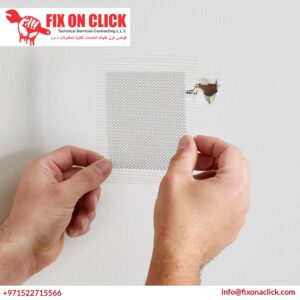
Why a “Small” Drywall Hole Rarely Stays Small
Most homeowners assume a tiny puncture is harmless. It isn’t — not always. Drywall is a layered material, and once the paper facing or gypsum core is broken, the surrounding area weakens gradually. Dust settles in, humidity gets a way in, and over a few months you’ll notice the edges of the hole starting to crumble or the paint around it flaking off.
In Dubai specifically, the AC-driven humidity swings inside most homes make this worse. A hole that looks dry and stable in October can be soft and damp by February if condensation has been finding its way behind the wall. That’s why we never just “fill and forget” — every repair starts with checking what’s happening behind the surface, not only what’s visible on it.
What Typically Causes Drywall Holes
- Door handles hitting the wall repeatedly (this is by far the most common one we see)
- Furniture being dragged or shifted during moving day
- Old screw and nail holes left from shelves, mirrors, or wall art
- Accidental impacts — kids, pets, moving boxes
- Electrical or plumbing access cuts that were never patched properly
- Water leaks that soften the gypsum board from the inside out
Knowing the cause matters more than people think. A hole from a doorstop is a five-minute fix. A hole caused by a slow leak behind the wall needs the moisture source addressed first — otherwise you’re painting over a problem that’s still active.
How We Repair Drywall Holes — Step by Step
Every job looks a little different depending on hole size, wall type, and what’s around it (tiles, wallpaper, textured paint, etc.), but the core process stays consistent:
1. Inspection and Assessment
Before touching anything, our technician checks the hole’s edges, presses around the surrounding drywall to feel for softness, and looks for staining that might point to a water source. If there’s any doubt about moisture, we’ll flag it before starting — patching over a wet wall is a waste of everyone’s time and money.
2. Cleaning and Prepping the Area
Loose debris, crumbling gypsum, and dust get cleared out. Edges are squared off or lightly sanded so the new material has something solid to bond to. This step gets skipped in rushed DIY jobs more than any other, and it’s usually the reason patches fail within weeks.
3. Choosing the Right Repair Method
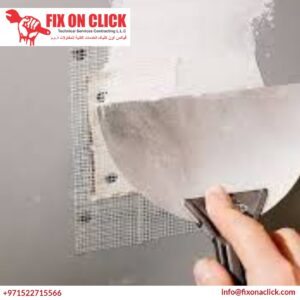
Nail holes and small punctures (under roughly 2 inches) get filled directly with a quality spackle or joint compound. Anything bigger — a doorknob-sized hole, a corner impact, or damage from a wall fixture being ripped out — needs a backing patch. We cut a piece of drywall or use a self-adhesive mesh patch, secure it properly, and build the compound up in thin layers rather than one thick coat that’s guaranteed to crack.
4. Sanding and Blending
Once dry, the patch gets sanded flush with the wall. If your wall has texture — orange peel, knockdown, or a smooth skim finish — we match it here. This is the part that separates a repair that “looks fine from far away” from one that’s genuinely invisible up close.
5. Priming and Painting
New compound absorbs paint differently than the surrounding wall, so it always gets primed first. Then we colour-match and finish with paint that blends into the existing wall, not a patch that reads as a slightly different shade under daylight.
Small Holes vs Large Holes — What’s the Real Difference?
People often ask why pricing and timing vary so much for what looks like “just a hole.” Here’s the honest breakdown:
Small Holes (Nail Holes, Screws, Minor Dents)
These are usually cosmetic-only jobs. Spackle, light sanding, primer, paint — done within a couple of hours, often same-day. No structural concern here at all.
Medium Holes (Doorknob Damage, Small Impacts)
These need a patch, not just filler. Without a backing piece, the compound will crack again within months because there’s nothing holding it in place from behind.
Large or Irregular Holes
Anything from a bigger impact, a removed fixture, or water-damaged drywall that had to be cut out. These need a proper drywall patch cut to size, screwed or taped into the studs or surrounding board, then finished in stages over a day or two to let each coat cure.
If you’re also dealing with staining or softness around the hole, it’s worth reading about our general drywall repair service, which covers water-related damage beyond just holes.
Our 60+ Service Vehicle Fleet — Fast Response Across Dubai
One thing that genuinely sets FOC apart isn’t just the repair technique — it’s how fast we can actually get to you. We run a fleet of over 60 fully equipped service vehicles stationed across Dubai, each stocked with the tools, compounds, and patch materials needed for drywall work on the spot. No waiting for a technician to drive across the city, no “we’ll schedule you for next week” excuses.
Whether you’re in Downtown, Marina, Jumeirah, Business Bay, or further out toward Dubai Hills or Arabian Ranches, there’s almost always a vehicle already close to you. This matters most when a hole is exposing your wall to humidity or when you’ve got guests arriving and need it gone yesterday. We built the fleet around one idea: repairs shouldn’t wait longer than the damage takes to happen.
Why the Fleet Size Actually Matters to You
- Faster response times — technicians dispatched from the nearest available vehicle, not a central depot
- Same-day service available for most small to medium drywall holes
- Fully stocked vans mean fewer return visits for missing materials
- Coverage across every major area of Dubai, not just central zones
DIY Patch vs Professional Repair — Be Honest With Yourself
Spackle from the hardware store will absolutely fill a nail hole. Nobody’s arguing that. Where DIY tends to fall apart is on anything bigger than a coin — the patch shrinks as it dries, cracks appear along the edges within weeks, and the texture never quite matches, so you end up with a visible patch even after painting.
There’s also the moisture question. A DIY job almost never checks what’s happening behind the wall. If there’s a slow leak or trapped humidity, sealing it up with a fresh patch just hides the problem until it resurfaces — usually as a bigger, messier repair a few months later.
Professional repair costs more upfront than a tube of filler, sure. But it’s a one-time fix instead of a recurring one, and that’s really the whole value proposition.
Signs Your Drywall Damage Needs Immediate Attention
Not every hole is urgent, but a few warning signs mean you shouldn’t wait:
- Soft or spongy texture around the hole when pressed
- Brownish or yellowish staining spreading outward from the damage
- A musty smell near the wall, especially in bathrooms or kitchens
- Bubbling paint or peeling wallpaper near the hole
- The hole getting visibly bigger on its own over time
Any of these point toward moisture involvement, and that’s not a job for filler alone — it needs proper drying, sometimes mold treatment, and then the actual patch.
Dubai’s Climate and Why It Affects Drywall More Than People Realise
Summer humidity swings and constant AC use put more strain on drywall here than in most climates. Walls near external doors, balconies, or poorly sealed windows go through repeated cycles of moisture absorption and drying, which weakens the gypsum core faster than in a stable, dry environment. A hole that would sit fine for years in a drier climate can start crumbling at the edges within months here if it’s near one of these humidity-prone spots.
This is part of why we check surrounding wall condition even for what looks like a simple repair. A hole near a bathroom wall, a kitchen backsplash, or an external wall facing direct sun exposure gets treated a little differently than one in the middle of a dry interior wall — sometimes that means using moisture-resistant compound, sometimes it means recommending a quick check of nearby sealant or weatherproofing before we patch anything.
Older Buildings vs Newer Developments
We also see a noticeable difference between older buildings and newer developments across Dubai. Older properties sometimes have drywall installed with thinner gypsum board or less consistent finishing from the original build, which means patches need a bit more reinforcement to hold properly. Newer developments generally have more standardised wall specifications, so repairs tend to be faster and more predictable. Either way, our technicians adjust technique and materials based on what they find on-site rather than applying a one-size-fits-all approach.
Areas We Cover in Dubai
Our vehicles reach residential and commercial properties across Dubai Marina, Downtown Dubai, Jumeirah, Business Bay, Al Barsha, JVC, Dubai Hills Estate, Arabian Ranches, Mirdif, and surrounding communities. If you’re unsure whether your area is covered, just reach out — chances are one of our vans isn’t far from you.
What Our Repairs Include
Every drywall hole repair booking with FOC covers:
- On-site inspection and moisture check
- Cleaning and preparation of the damaged area
- Patch material and reinforcement where needed
- Texture matching to your existing wall finish
- Priming and final paint blend
- A clean-up before we leave — no dust piles or leftover debris
If your walls have broader issues beyond holes — cracks, water stains, or peeling — it’s worth browsing our full drywall repair page for related services.
Materials We Use and Why They Matter
A lot of drywall repairs fail not because of bad technique but because of cheap materials. Joint compound that shrinks too much while drying, mesh tape that lifts at the edges, or mismatched drywall thickness — these are the small details that turn a good repair into a visible one within a few months.
At FOC, technicians carry setting-type compound for structural patches (it dries harder and resists cracking better than lightweight all-purpose filler), self-adhesive fiberglass mesh for medium holes, and properly sized drywall offcuts for larger sections. For homes with moisture-prone areas — bathrooms, laundry rooms, kitchen walls near plumbing — we also use moisture-resistant board where it makes sense, rather than standard gypsum that will just fail again if there’s ever a repeat leak.
Paint and Primer Matching
This part gets overlooked constantly. New drywall compound is porous and absorbs paint unevenly if it isn’t primed first — that’s why untrained patch jobs often show a slightly duller or flatter patch even after painting. We always prime before the final coat, and we colour-match against your existing wall rather than guessing from a swatch. If your walls have aged or faded slightly since they were last painted, we account for that too.
Drywall Holes in Rental Properties — What Tenants and Landlords Should Know
A big chunk of our drywall repair calls in Dubai come from tenants preparing to move out, or landlords getting a unit ready between tenancies. Move-out inspections are strict here, and unrepaired nail holes or wall damage can turn into deductions from a security deposit, or disputes that drag out longer than they need to.
We regularly handle bulk touch-ups for landlords and property managers — patching multiple holes across a unit, matching wall colours from previous tenants, and getting the property back to a rentable condition quickly. If you’re a tenant trying to avoid a deposit dispute, a same-day patch-and-paint visit is usually far cheaper than what gets deducted for unrepaired damage.
For Landlords Managing Multiple Units
If you manage more than one property, it’s worth setting up a standing arrangement with us rather than booking each repair individually. Our fleet coverage means we can rotate between units in the same building or community without long gaps between visits, which is particularly useful during turnover season when several units need attention around the same time.
Drywall Hole Repair vs Wall Replacement
Occasionally a client asks whether it’s better to just replace an entire wall panel instead of patching. In almost every case, the answer is no — replacement means more mess, more cost, and more time, and it’s rarely necessary unless the damage is extensive (large sections of water-damaged board, mold spreading across a wide area, or structural movement affecting multiple panels).
Patch repair, done correctly with the right backing and reinforcement, holds up just as well as the original wall. The only scenario where full panel replacement makes sense is when the damage covers a large enough area that patching would require more cuts and joins than it’s worth — at that point, a fresh sheet is simpler and faster.
How Long a Proper Repair Actually Lasts
Done right, a drywall hole repair should last as long as the rest of the wall — meaning indefinitely, barring another impact or a new leak. The failures people usually associate with “drywall patches not lasting” almost always trace back to skipped steps: no backing patch on a hole that needed one, compound applied in one thick layer instead of thin coats, or no primer before painting.
We stand behind our repairs because we don’t cut those corners. If a patch we’ve done ever cracks or shows through paint prematurely, get in touch and we’ll come back and sort it.
Book Your Drywall Hole Repair
Getting a hole fixed shouldn’t be complicated. Send us a photo of the damage, tell us roughly where you’re located, and we’ll get a technician and one of our 60+ service vehicles routed to you — often the same day. No hidden charges, no upsells you didn’t ask for, just a wall that looks like nothing ever happened.
What to Expect on the Day of the Visit
When you book with FOC, you’ll get a rough time window rather than an all-day wait — our dispatch system routes the nearest available vehicle to you, so windows tend to be tighter than what you’d get from a call-around handyman. On arrival, the technician will look at the hole, confirm what you already told us over the phone or via photo, and walk you through the plan before starting. For anything beyond a simple nail hole, they’ll explain whether it needs a backing patch, how many coats it’ll take, and roughly how long drying and finishing will take.
Small jobs are usually wrapped up in one visit. Larger patches involving multiple coats of compound may need drying time between layers, so we’ll either wait on-site or schedule a short follow-up visit to finish sanding and painting, depending on what works better for your schedule.
Payment and Follow-Up
Payment is handled after the work is done and you’ve had a chance to look it over. If anything about the finish doesn’t sit right with you — texture, colour match, edges — flag it before the technician leaves. We’d rather fix a detail on the spot than have you notice it later.
Handling Multiple Holes in One Visit
It’s common for a single property to have several holes at once — a few nail holes from old wall art, a doorknob dent, maybe a corner impact from moving furniture. Rather than treating each as a separate job, we handle them together in one visit, which saves both time and cost compared to booking repairs individually. This is especially common with move-out repairs, where a full walkthrough of the unit turns up more small damage than most tenants remember.
Frequently Asked Questions
How much does drywall hole repair cost in Dubai?
Cost depends on hole size and whether a backing patch is needed. Small nail holes are inexpensive and quick. Larger holes requiring a patch, texture matching, and repainting cost more but remain far cheaper than replacing a wall section. We provide a clear quote after a quick inspection or photo review.
Can you match my wall’s texture exactly?
Yes. Whether your wall has a smooth finish, orange peel texture, or a knockdown pattern, our technicians replicate it during the finishing stage so the patch blends into the surrounding surface rather than standing out.
Do I need to be home during the repair?
For most jobs, yes, at least to let the technician in and confirm the work afterward. Larger repairs involving multiple coats and drying time may take a few hours, so we’ll give you a realistic window before starting.
What if the hole was caused by a water leak?
We’ll flag this during inspection. The leak source needs to be resolved first — either by us or a plumber, depending on the cause — before the patch goes on. Patching over an active leak just delays the problem.
How fast can someone come out to look at it?
With more than 60 service vehicles positioned across Dubai, same-day visits are common for most requests, and many small repairs are completed on the same visit.
Will the repaired area be visible after painting?
Not if it’s done properly. Our finishing process — sanding, texture matching, priming, and colour-matched paint — is built specifically to make the patch disappear into the existing wall.