
Drywall Repair Dubai
Walls take a beating in ways people don’t really notice until they’re actually looking for it — a doorknob that’s dinged the same spot one too many times, a nail pop that’s been bothering you for months, a crack near a corner that showed up after a particularly hot summer. None of these are dramatic on their own, but they add up, and drywall damage has a way of getting worse the longer it sits. Fix On Click handles drywall repair across Dubai regularly, and most jobs we get called out for started small enough that they could’ve been a quick fix months earlier.
Why Wall Damage Rarely Stays a Minor Issue
A small crack near a corner or a nail pop where a fastener’s slightly worked its way loose doesn’t look urgent, but drywall damage tends to compound rather than stay static. Building settlement, humidity swings, and ongoing stress on the same weak point all work against a minor issue over time, gradually turning something that would’ve been a quick patch into a section that needs more extensive repair. Addressing it early is almost always the cheaper, simpler path.
The Range of Damage We Actually See
Cracks show up most often from natural building settlement or temperature and humidity fluctuations, and while a hairline crack might seem trivial, it tends to widen gradually if left alone. Holes from accidental impact, a doorknob repeatedly hitting the same spot, or furniture being moved carelessly are another common category, ranging from something a quick patch handles fine to larger holes that need proper structural backing before patching makes sense. Water damage weakens drywall from within, sometimes leading to mold growth or staining that keeps returning even after repainting. Warped panels, usually from prolonged moisture exposure, need a different approach entirely since the material itself has physically deformed rather than just cracked or been dented.
Why This Isn’t Really a Weekend DIY Project
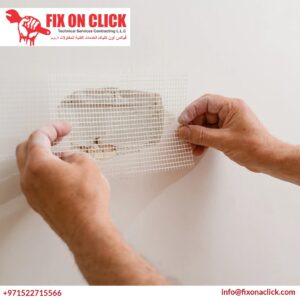
Drywall repair kits are easy enough to find at any hardware store, and for a genuinely tiny nail hole, that might be all you need. But repairing anything beyond that — a real hole, a structural crack, water-damaged material — without proper technique tends to leave visible seams, a texture that doesn’t quite match, or a patch that looks fine for a few weeks before cracking again along the repair line. Getting a genuinely invisible repair takes more than filling a gap and sanding it smooth.
Where DIY Attempts Usually Go Wrong
Uneven surfaces from insufficient sanding, visible seams where new material meets old, and mismatched texture are the most common issues we see when correcting a previous DIY attempt. Water-related damage in particular needs specialized handling — simply patching over a water-damaged section without addressing moisture content or checking for mold underneath just means the same problem resurfaces, often looking worse than the original damage did.
Our Repair Process, Start to Finish
Every repair starts with a proper inspection to understand the actual extent of the damage, not just what’s visible on the surface. We identify whether the root cause is structural, environmental, or purely accidental, since a repair that only addresses the visible symptom without understanding why it happened in the first place tends to need revisiting sooner than it should.
Preparation Before Any Patching Begins
Once we understand what we’re dealing with, preparation includes cleaning the damaged area, removing any loose debris, and securing unstable sections of drywall that might otherwise compromise a new patch. Skipping this step is one of the more common shortcuts that leads to a repair failing prematurely, since patching over loose or unstable material just gives the new work an unreliable foundation.
Patching, Sanding, and Getting the Finish to Match
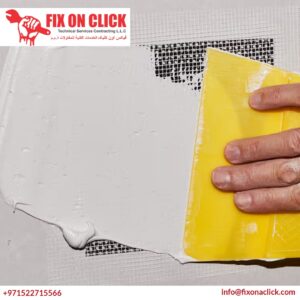
High-quality patching materials get applied based on what the specific damage actually calls for — filling a crack needs a different technique than replacing a full section or treating a water-damaged panel. Once the patch is in place, careful sanding creates a genuinely smooth transition, and the final finishing and painting stage is what determines whether a repair actually disappears into the surrounding wall or stands out as an obvious fix. We aim for the former every time, matching texture and finish carefully rather than leaving a visibly different patch.
Our 60+ Vehicle Fleet Supports Fast Response Across Dubai
Fix On Click maintains a fleet of over 60 fully equipped service vehicles for home maintenance services, positioned across different parts of Dubai rather than dispatched from a single depot. For drywall repairs specifically, this matters when water damage is actively spreading or when a larger hole needs prompt attention before it worsens further. Whether it’s a small patch job or a repair involving multiple rooms, having technicians already positioned across the city means faster response than waiting for someone to travel from one central location.
Why Addressing Damage Promptly Actually Saves Money
A minor crack or small hole caught early costs considerably less to fix than the same damage left to develop for months. Beyond the direct repair cost, delayed attention risks the issue spreading into a structural concern, particularly with water-related damage where mold can develop and spread well beyond the original point of moisture intrusion. Timely repair also just keeps a property looking properly maintained, which matters for day-to-day comfort in a home and for professional appearance in a commercial space.
What Neglected Damage Signals to Others
For commercial properties specifically, visible wall damage sends a message to anyone walking through the space, whether that’s a client, a customer, or a potential business partner. People tend to associate the condition of a property with the quality of what’s actually being offered inside it, even if that association isn’t entirely fair. Keeping walls properly maintained is a small detail that contributes meaningfully to how professional a space feels overall.
Every Property and Every Repair Is a Bit Different
No two drywall repair jobs are quite identical, and we approach each one based on the specific property’s needs rather than a one-size-fits-all template. Some clients need a quick touch-up on a single small area, others are dealing with more extensive damage across multiple rooms, and some are looking at a full section replacement. We work through what actually makes sense given the scope, budget, and timeline involved, rather than upselling more extensive work than a situation genuinely calls for.
Matching Existing Textures and Finishes
Beyond just filling and sanding, we pay close attention to matching existing wall texture, finish sheen, and paint color so a repair blends in rather than becoming an obvious patch once the lighting hits it a certain way. This attention to matching is what separates a repair that genuinely disappears into the wall from one that’s technically sound but visually noticeable.
Building Repairs That Actually Last
Durability matters more than a quick fix that looks fine on day one. We use quality materials, proper technique, and thorough checks throughout the process rather than rushing toward a finished appearance without the underlying work to back it up. We also share guidance on maintaining walls properly afterward, since a well-executed repair combined with reasonable care tends to hold up for years rather than needing revisiting within a short time.
Why High-Traffic and Humid Areas Need Extra Consideration
Hallways, entryways, and any area seeing regular contact wear differently than a quiet bedroom wall would, and repairs in these spots benefit from reinforcement that accounts for that ongoing use. Similarly, areas prone to humidity swings or moisture exposure need repair materials and techniques chosen specifically to hold up under those conditions, rather than a standard approach that doesn’t account for the environment a specific wall actually deals with.
Making the Process as Painless as Possible
Drywall repair, even when contained to a small area, can feel disruptive if it’s not managed well. We aim to make the process straightforward from the initial consultation through final inspection — clear communication, efficient work, and genuine respect for your property throughout. Keeping the work area protected and clean during the repair matters just as much as the technical quality of the patch itself.
What Clients Actually Notice Most
Professionalism, attention to detail, and a finish that genuinely holds up are what tend to come up most when clients describe why they’d call us again for a future repair. It’s rarely just about the technical correctness of a patch — it’s about the whole experience feeling handled properly from start to finish, without unnecessary disruption or vague communication along the way.
Why DIY Kits Fall Short More Often Than People Expect
Hardware store drywall repair kits work fine for a genuinely tiny nail hole, but attempting anything more involved without proper technique tends to produce disappointing results — uneven surfaces, visible seams, or cracks that reappear within a short time. Water-related damage and more extensive deterioration specifically need specialized knowledge and equipment that a basic kit simply doesn’t account for. Choosing a professional repair eliminates the risk of a subpar patch and ensures the work is done with the precision and durability that actually holds up.
When It’s Genuinely Fine to Handle Something Yourself
A single small nail hole or a very minor surface scuff is reasonable for most people to handle with a basic kit. The line tends to get crossed once a repair involves an actual hole larger than a couple of inches, a crack that’s clearly structural rather than cosmetic, or any damage connected to water or moisture, where getting it wrong risks a repair that fails again shortly after completion.
Sustainable Practices in How We Work
We aim to minimize waste during repair projects by recycling old drywall material where possible and using environmentally responsible products throughout the process. This isn’t just a nice-to-have — it contributes to a cleaner, healthier indoor environment for clients while reflecting a broader commitment to doing this work responsibly rather than treating waste and material choice as an afterthought.
Choosing Materials With Longevity in Mind
Beyond the environmental angle, materials chosen for durability rather than just upfront cost tend to reduce how often a wall needs attention again down the line. This matters both for the client’s long-term maintenance costs and for reducing the overall material turnover involved in repeatedly redoing the same repair because the original materials weren’t built to last.
Structural Cracks vs Cosmetic Cracks
Not every crack in drywall means the same thing. A cosmetic crack, often following a taped seam between drywall sheets, usually traces back to minor settling or temperature-related expansion and contraction, and it’s typically a straightforward repair. A structural crack, particularly one that’s widening, running diagonally, or showing up alongside other signs like a door that’s suddenly harder to close, can point to something more significant happening with the building’s frame. We assess which category a crack falls into before recommending a repair approach, since treating a structural issue as purely cosmetic just means it reappears, often worse, within a relatively short time.
When a Wall Repair Reveals Something Bigger
Occasionally, opening up a damaged section of drywall reveals something beyond the immediate issue — evidence of a previous leak that was never properly addressed, wiring that’s been exposed to moisture, or signs of a pest issue that’s been affecting the wall cavity. We flag anything like this immediately, since a proper repair means addressing what’s actually found, not just patching over the visible symptom and moving on.
Handling Repairs in Occupied Homes and Businesses
Most drywall repairs happen in spaces that are still in active daily use, which means minimizing disruption matters as much as the quality of the repair itself. We protect surrounding furniture and flooring, work efficiently to keep the timeline reasonable, and for commercial properties, coordinate around business hours wherever a client’s operations allow for it.
What to Expect Once the Work Is Done
Once a repair’s finished, we walk through the completed work with you, confirming that the texture, finish, and paint genuinely match the surrounding wall. Any final touch-ups happen before the job’s considered complete, and the work area gets cleaned properly so there’s no lingering dust or debris left for you to deal with.
Nail Pops and Why They Keep Coming Back
A nail pop — that small raised bump or crack where a fastener has worked its way slightly loose from the framing behind the drywall — is one of the more common minor issues we get called out for, and it’s also one people tend to underestimate. Simply pushing the nail back in and covering it with compound often doesn’t hold, since whatever caused the fastener to loosen in the first place, usually building movement or seasonal expansion and contraction, is still going to keep working against that same spot. A proper fix means addressing the fastener itself, sometimes replacing it with a screw set slightly differently, before patching over it, which gives a repair a genuine chance of actually holding rather than popping again within a year.
Corner Bead Damage: A Specific Kind of Wear
The corner bead, the metal or plastic strip reinforcing an outside wall corner, takes a specific kind of abuse over time — furniture bumps, foot traffic in hallways, general wear at a vulnerable edge. Damage here looks different from a flat wall crack or hole, and repairing it properly means addressing the bead itself, not just filling over visible damage with compound and hoping it holds. A corner that’s been patched without fixing the underlying bead tends to show cracking again along that same edge within a relatively short time, since the reinforcement that’s supposed to protect that corner is still compromised underneath.
Ceiling Fixtures and Wall-Mounted Items
Heavier wall-mounted items — shelving, TV mounts, larger picture frames — sometimes cause drywall damage not through impact but through the mounting hardware gradually pulling loose from insufficient backing. When we’re repairing damage around a mounting point, we check whether proper backing or anchoring was used originally, and if not, we address that as part of the repair rather than just patching the hole and leaving the same underlying issue for whatever gets mounted there next.
Why Some Holes Need More Than a Simple Patch
A larger hole, generally anything bigger than a few inches across, needs structural backing behind the patch rather than just filling the gap with compound, which won’t hold on its own without something solid behind it. This typically means installing a backing piece behind the hole before applying new drywall material over it, giving the patch actual support rather than relying purely on the compound and tape to bridge an unsupported gap. Skipping this step on a larger hole is a common reason a seemingly successful DIY patch eventually flexes, cracks, or fails outright under any pressure.
Working Around Electrical and Plumbing Access Points
Drywall damage occasionally occurs near or directly over electrical boxes, switches, or plumbing access points, which adds a layer of care to the repair process. We work carefully around these fixtures, ensuring electrical safety throughout and that any access needed for future maintenance isn’t unnecessarily sealed off during the repair. In some cases, incorporating a properly finished access panel makes more sense than fully closing up an area that’s likely to need attention again for an unrelated reason down the line.
What Happens When Damage Is Near Insulation
In exterior walls or areas backed by insulation, drywall damage sometimes exposes or disturbs the insulation behind it, particularly with larger holes or water damage that’s compromised a bigger section. We check insulation condition during more extensive repairs and address it if it’s been affected, since leaving damaged or displaced insulation behind a fresh patch undermines both energy efficiency and, in cases of water exposure, creates conditions for mold growth in material that’s now hidden behind new drywall.
Understanding Drywall Thickness and Type Differences
Not all drywall is the same thickness or type, and matching a repair to what’s actually installed matters for both structural consistency and finish quality. Standard drywall, moisture-resistant board typically used in bathrooms and kitchens, and fire-rated board used in certain shared walls or specific code-required locations all behave slightly differently and need matching material for a repair to integrate properly. Using standard drywall to patch a section that was originally moisture-resistant board, for instance, undermines the protective purpose that material choice was originally meant to serve.
Why Matching Panel Thickness Matters More Than It Seems
A repair using drywall that’s even slightly thinner or thicker than the surrounding panels creates a visible ridge or depression once finished, no matter how carefully the compound is applied and sanded. We confirm the thickness of existing material before sourcing a patch panel, since this small detail is exactly the kind of thing that separates a repair that’s invisible once painted from one that catches the eye under certain lighting.
Cost Factors Worth Understanding Upfront
Drywall repair costs vary based on a few factors that aren’t always obvious before an assessment. Size of the damaged area matters most directly, but so does whether structural backing is needed, whether texture matching is straightforward or more involved, and whether the underlying cause has actually been resolved before the repair starts. Repairing a wall while an active leak is still ongoing, for example, means either delaying work until the source is fixed or accepting the risk of a repair failing again shortly after completion, which is worth discussing clearly before committing to a timeline.
Why a Significantly Cheaper Quote Deserves a Closer Look
A notably lower quote for comparable scope of work usually means something’s being cut — fewer coats of compound, less careful texture matching, or lower-quality patching material. The visible result on day one can look similar regardless of which contractor did the work, but the difference tends to show up within the first year as cracking along repair edges or a patch that starts looking visually different from the surrounding wall as both age at different rates.
Handling Multiple Repairs Across a Property Efficiently
Properties with damage in more than one location benefit from a coordinated visit rather than treating each spot as a completely separate job. Addressing several areas during the same appointment is generally more efficient and cost-effective than scheduling separate visits, and it gives us a fuller picture of whether multiple issues might share a common cause, such as a building-wide settling pattern or a humidity issue affecting several rooms differently depending on airflow and exposure.
Working With Property Managers on Recurring Issues
For clients managing multiple units or a larger property portfolio, we keep documentation of repairs performed, including what was found and what was done, so recurring damage in a specific unit or building section gets tracked as a pattern rather than handled fresh every time. This is particularly useful for identifying whether a shared structural or moisture issue is behind seemingly separate drywall problems showing up across different units over time.
Painting After a Drywall Repair
Once a repair is structurally and texturally complete, the final paint layer determines how invisible the patch actually ends up looking. Using leftover paint from the original job, if it’s available and hasn’t aged too much, gives the closest possible match. When original paint isn’t available, painting the entire wall rather than just the patched section usually gives a better overall result, since even a very close color match can look subtly different once applied, and a partial repaint often stands out more than a full one would under certain lighting angles.
Why Sheen Consistency Matters as Much as Color
Paint sheen, whether flat, eggshell, or satin, can show noticeable differences between an older, slightly aged coat and a fresh one, even when the underlying color matches closely. This is particularly visible on walls that catch direct or angled light throughout the day, where a sheen mismatch becomes obvious even if the color itself is spot on. We factor this into recommendations for how much of a wall or room should be repainted following a repair, rather than assuming a small patched area alone will blend seamlessly once painted.
Booking a Drywall Repair
Reach out by phone or through our website and describe what you’re dealing with — a crack, a hole, water damage, or a section that’s just not looking right anymore. We’ll schedule an assessment promptly and provide a clear estimate before any work begins.
Frequently Asked Questions
Can you fix a hole in drywall without it being visible afterward?
Yes, with proper patching, sanding, and careful texture and paint matching, a repaired section typically blends in completely rather than standing out as an obvious patch.
How do I know if a crack is just cosmetic or something more serious?
Cosmetic cracks usually follow a seam line and stay relatively stable, while structural cracks tend to widen over time, run diagonally, or appear alongside other signs like a door becoming harder to close. A proper assessment can tell you which one you’re dealing with.
Is it worth trying a DIY drywall repair kit first?
For a very small nail hole, a basic kit can work fine. Anything larger, or any damage connected to water or moisture, is worth having professionally assessed, since a poorly executed patch often needs to be redone properly anyway.
What happens if water damage has already caused mold?
We assess for mold during inspection and treat it properly as part of the repair process, rather than simply patching over affected material and risking the issue resurfacing.
Do you match the existing texture and paint color?
Yes, matching texture, finish, and paint color carefully is a standard part of every repair, since it’s what makes the difference between a visible patch and a genuinely seamless fix.
Can you handle repairs in an occupied home or business?
Yes, we work around your schedule wherever possible, protecting surrounding furniture and flooring, and for commercial clients, coordinating around business hours to minimize disruption.
Final Word
Drywall damage, whether it’s a small crack, an accidental hole, or something more involved from water exposure, tends to get more complicated the longer it sits unaddressed. Fix On Click brings experienced technicians, quality materials, and a citywide fleet supporting fast response to every drywall repair we handle. If a wall in your home or business isn’t looking the way it should, reach out and let’s get it properly assessed and fixed.