
Gypsum Ceiling Repair Dubai – Fix Cracks, Stains & Sagging The Right Way
A ceiling doesn’t usually get noticed until something’s wrong with it. Then suddenly it’s all you see — a hairline crack running across the living room, a brown water stain spreading near the AC vent, or a corner that’s started to sag just enough to make you nervous every time you walk under it. Gypsum ceilings are everywhere in Dubai homes and offices because they look clean and finish beautifully, but when they go wrong, patching them badly makes things worse, not better. Fix On Click deals with this exact problem daily, and our approach to gypsum ceiling repair is built around fixing the actual cause, not just smoothing over what’s visible.
What Actually Causes Gypsum Ceilings To Fail
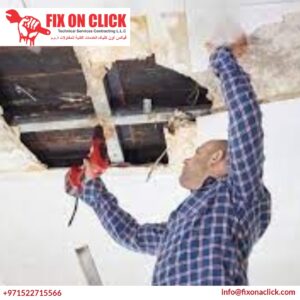
Gypsum board is a solid material, but it’s not indestructible, and it reacts to things most people don’t think about until it’s too late. Humidity swings, building movement, and honestly just poor installation from years ago all play a part. A panel that wasn’t fastened tightly enough might sit fine for years and then suddenly shift. A slow drip from a pipe hidden above the ceiling can quietly damage a board long before anyone notices a stain on the surface.
Poor ventilation is one of the more overlooked culprits. Gypsum absorbs moisture slowly, so a room without proper airflow lets that moisture sit and slowly weaken the board from the inside. By the time paint starts bubbling or joints start separating, the damage has usually been building for a while.
Why A Quick Paint Job Never Actually Fixes It
Painting over a crack or slapping filler on without understanding what caused it is one of the most common mistakes we see, usually from a previous contractor who wanted to finish the job fast. It looks fine for a few weeks, then the crack comes right back, sometimes worse than before. Our team starts every repair by figuring out what’s actually going on behind the surface — is it structural movement, moisture, a loose fastening point, or just old installation that was never done properly to begin with. Once we know that, the repair actually holds.
How Fix On Click Approaches Every Ceiling Differently
No two damaged ceilings are quite the same, even when the symptoms look identical from a distance. A crack in one home might be a harmless surface fracture from temperature changes, while the same-looking crack next door points to something structural. That’s why we don’t work off a fixed script — every job starts with reading what the ceiling is actually telling us.
Cracks usually mean internal stress somewhere. Stains almost always point to moisture getting in from somewhere it shouldn’t. Sagging is a load or support issue, and it’s the one that tends to worry people the most because it looks — and sometimes is — genuinely risky. Reading these signs correctly before touching anything is what separates a repair that lasts from one that doesn’t.
The Craft Side Of It
Our technicians spend real time learning how gypsum behaves — how it bonds, how joints move over time, how different finishing techniques hold up under Dubai’s climate. It’s treated as a craft here, not a quick task. Joint compound gets applied in proper layers, seams get aligned until they genuinely disappear rather than being visible under certain lighting, and any decorative edges or curves get restored to match the original shape. When we’re done, a ceiling shouldn’t look “repaired” — it should look like nothing ever happened to it.
A 60+ Vehicle Fleet That Gets Us There Fast
One thing that makes a real difference for ceiling repairs specifically is how quickly we can actually get a technician on site to assess the damage before it spreads further — especially with water-related issues, where every extra day means more moisture soaking into the board. Fix On Click runs a fleet of more than 60 fully equipped service vehicles for home maintenance work, positioned across different parts of Dubai rather than centralized in one location.
That means whether you’re in a villa in Arabian Ranches or an apartment in Downtown, there’s usually a technician already close enough to reach you quickly, carrying the tools and materials needed to start the assessment — and often the repair itself — without a long wait for a second visit. For ceiling damage tied to an active leak, this speed genuinely matters, since the longer moisture sits in a gypsum board, the more of it ends up needing full replacement instead of a simple patch.
The Problems We See Most Often
Cracking tops the list by a wide margin. Some cracks are cosmetic, caused by nothing more than temperature shifts expanding and contracting the material. Others run deeper and point to structural tension or installation that was never quite right. We look at the depth and direction of the crack before deciding whether it needs joint reinforcement, resecuring the board, or improving the ceiling’s support before finishing it properly.
Water damage comes in a close second, usually from pipe leaks, a faulty AC unit, or roof seepage during Dubai’s rare but intense rain spells. Gypsum handles moisture badly — it softens, discolors, and eventually crumbles if left unaddressed. The first thing we do here is find and fix the actual source of the moisture, because repairing a ceiling while the leak is still active is pointless. Once that’s sorted, we check which boards can be saved and which need replacing, then rebuild the surface so no trace of the damage remains.
Sagging is the one that makes people nervous, and sometimes for good reason. It happens when screws lose their grip, adhesives weaken with age, or the framing behind the board shifts slightly. We treat sagging as urgent — supporting the ceiling properly, replacing weakened sections, and reinforcing the framework so the ceiling regains its shape without putting stress on the surrounding areas.
Visible joint lines and uneven surfaces usually trace back to rushed installation or cheap finishing materials from a previous job. Fixing this involves sanding, leveling, and refinishing with compounds that actually bond and cure evenly, so the ceiling reads as one continuous smooth surface rather than a patchwork of visible seams.
Why DIY Ceiling Fixes Usually Backfire
Plenty of homeowners try a small gypsum repair themselves before calling anyone, and it’s understandable — a crack looks like something you can just fill in. The problem is that what you see on the surface is rarely the whole picture. A crack might run far deeper than it appears. A stain might mean water has been quietly getting in for months. A sagging patch could mean the framing itself has shifted. Without a proper inspection, it’s genuinely hard to judge how serious the underlying issue actually is, and a DIY patch job over something structural just delays the real fix while making it harder to diagnose later.
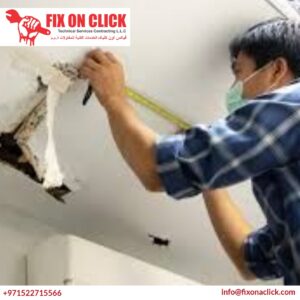
Every job we take on starts with a real assessment — checking humidity levels around the affected area, testing material strength, confirming how securely boards are still fastened, and looking at the overall condition of the ceiling. We use moisture detection tools and check for hidden weak points that aren’t obvious just from looking up. This tells us whether a section can genuinely be repaired or whether it needs replacing, and we always aim to save as much of the original ceiling as we reasonably can rather than pushing for a full replacement when it’s not needed.
What A Proper Repair Does For Your Property Beyond Looks
A ceiling covers more surface area in a room than almost anything else, so when it’s smooth and well-finished, the whole space feels different — brighter, more put-together, more intentional. When it’s cracked or stained, even good furniture and decor can’t really distract from it. That’s part of why a proper repair isn’t just cosmetic — it’s an investment in how the property reads to anyone walking into it, including potential tenants or buyers.
Repaired ceilings also reflect light more evenly, which genuinely changes how a room feels, especially in spaces that don’t get a lot of natural sunlight. For anyone preparing a property for rent or sale, a flawless ceiling is one of those small details that buyers and agents notice without necessarily being able to say why the space feels well cared for.
The Acoustic Side Nobody Talks About
Cracks and gaps in a ceiling don’t just look bad — they let sound travel more easily between floors or rooms than a properly sealed ceiling would. Once repaired correctly, the improved structure actually helps with noise control, which is a benefit most homeowners don’t think about going in but definitely notice once it’s done.
Getting An Assessment Booked
Reaching us is simple — call, message us on WhatsApp, or fill out the booking form on our site with a few details about what you’re seeing on the ceiling and where you’re located. For anything involving active water damage, mention it clearly so we can prioritize the visit. Our technician arrives with the tools needed to properly diagnose the issue on the spot, gives you a clear picture of what’s actually causing it, and quotes the repair before starting any work.

Honesty Over Upselling
If a ceiling section genuinely needs replacing rather than repairing, we say so directly instead of trying to stretch a patch job further than it should go. Likewise, if a repair is enough and a full replacement isn’t necessary, we won’t push for the bigger job just to increase the invoice. Fix On Click’s approach has always leaned on repeat clients and referrals rather than one-off jobs, and that only works if the advice given is actually honest.
Frequently Asked Questions
How do I know if my ceiling crack is serious or just cosmetic?
It depends on the depth, direction, and whether it’s growing over time. A professional assessment checks the crack’s origin rather than guessing from appearance alone, since a harmless surface fracture and a structural crack can look nearly identical to the untrained eye.
Can a water-damaged gypsum ceiling always be repaired instead of replaced?
Not always. It depends on how much moisture the board has absorbed and for how long. Some sections can be dried out and repaired, while others have softened too much and need replacing. We check this before recommending either option.
How quickly can someone come look at my ceiling?
Usually within an hour, since our fleet of 60+ service vehicles is spread across Dubai rather than dispatched from one central point, which keeps response times short even during busy periods.
Will the repair match the rest of my ceiling’s finish?
Yes, our technicians blend the repaired section into the surrounding surface so joints and texture disappear rather than standing out as an obvious patch.
What causes a gypsum ceiling to sag?
Usually loose screws, weakened adhesive over time, or a shift in the framing behind the board. We treat sagging as urgent since it can indicate a genuine safety risk if left unaddressed.
Do you fix the actual source of a leak before repairing the ceiling?
Yes, repairing a ceiling while the source of moisture is still active doesn’t hold, so we always address the leak first before touching the gypsum board itself.
Is gypsum ceiling repair messy or disruptive?
We plan the work to keep dust and disruption to a minimum, and we walk you through the timeline upfront so there are no surprises about how long the room will be out of use.
A Ceiling Worth Not Noticing Again
The best outcome for any gypsum ceiling repair is that you stop thinking about the ceiling entirely — no more glancing up at a crack, no more worrying about a stain spreading further. Fix On Click handles the diagnosis, the actual cause, and the finish work so the repair holds for years rather than needing another visit in a few months. If your home or office in Dubai has a ceiling that’s started showing cracks, stains, sagging, or uneven joints, get in touch and we’ll take it from there.