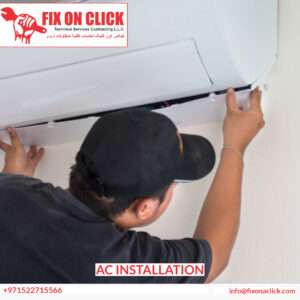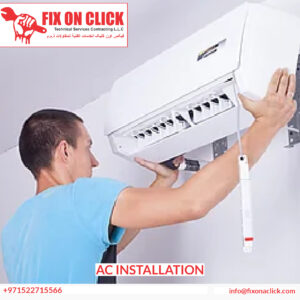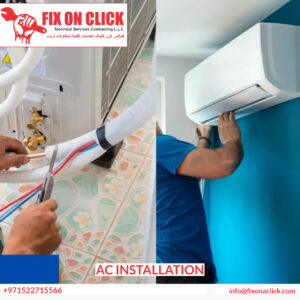
AC Installation Dubai
Buying a new air conditioner is the easy part. Getting it installed properly is where most of the actual value either gets locked in or lost. A lot of people assume installation is basically mounting a box and running a cable, but ask anyone who’s had a unit installed badly, and they’ll tell you the AC never quite worked right after — uneven cooling, a compressor that failed within two years, or an electricity bill that never made sense. Fix On Click handles AC installation across Dubai for homes and businesses, and the difference between doing it right the first time versus fixing someone else’s shortcuts later is honestly night and day.

What Actually Goes Into a Proper Installation
People picture installation as a single step, but it’s really a sequence of decisions, each one affecting the next. Room size, ceiling height, insulation quality, window placement, and even which direction a room faces all factor into what size unit you actually need. A unit that’s oversized cools the room fast but shuts off before it dehumidifies properly, leaving the space feeling clammy. An undersized unit runs constantly, never quite catching up, and burns through its lifespan years earlier than it should. Getting this sizing calculation right at the start avoids both problems entirely.
From there, it’s about where the indoor and outdoor units actually sit, how the refrigerant lines get routed between them, and how everything ties into your electrical setup safely. None of this is guesswork on our end — it follows load calculations and manufacturer specs, not a rough estimate based on what looks about right.
Split Systems, Ducted Units, and Everything In Between
Dubai properties vary a lot — a studio apartment doesn’t need what a four-bedroom villa needs, and neither of those match what a retail space or restaurant kitchen requires. Split systems work well for individual rooms or smaller apartments. Ducted systems make more sense for villas and larger homes where central, zoned cooling is the priority. Commercial spaces often need a mix, sometimes combined with VRF systems that let different zones run at different temperatures simultaneously. Picking the wrong category for your property type is one of the more common mistakes we see corrected during later service calls, and it’s almost always avoidable with proper planning upfront.
Why the Installation Quality Determines Your Electricity Bill
There’s a persistent idea that buying an expensive, high-SEER unit automatically means low power bills. It doesn’t work that way if the installation is sloppy. A system with poorly sealed refrigerant lines, an incorrectly charged refrigerant level, or ductwork with air leaks has to work considerably harder to hit the same temperature, and that extra strain shows up directly on your monthly bill regardless of how good the unit itself is on paper.
We pay close attention to things that don’t seem glamorous but matter a lot — proper insulation around refrigerant lines, correct refrigerant charge measured against manufacturer specs, sealed ductwork with no leakage points, and thermostat placement away from direct sunlight or drafts that would throw off its readings. These small details compound over months and years into a system that genuinely runs efficiently instead of just being marketed as efficient.
Our 60+ Vehicle Fleet Keeps Installation Timelines Predictable
One thing that frustrates people during AC installation projects is scheduling delays — a technician doesn’t show up on time, or a follow-up visit takes days to arrange. Fix On Click runs a fleet of 60+ fully equipped service vehicles for home maintenance services, positioned across different parts of Dubai rather than dispatched from a single central location. This means when we schedule your installation, our technicians and their equipment are genuinely close by, not stuck in traffic coming from across the city.
It also means if something needs a quick follow-up visit after installation — a minor adjustment, a warranty check, anything at all — we can usually get someone to you the same day rather than making you wait through a standard multi-day queue. For commercial installations especially, where downtime costs money, this kind of responsiveness matters more than people realize until they’ve dealt with a company that can’t offer it.
What Happens When Installation Is Rushed or Handled by Unlicensed Technicians
We get called in fairly often to fix problems that trace back to a cheap installation job someone did months or years earlier. Refrigerant handled incorrectly can damage a compressor, which is one of the priciest components to replace in the entire system. Poor duct design chokes airflow and forces every part of the system to overwork. Electrical connections done without proper safety checks can lead to faults that, in the worst cases, become fire hazards. Drain lines installed at the wrong angle or without proper traps cause water backup that damages ceilings and walls, sometimes going unnoticed until there’s visible staining.
Beyond the physical damage, there’s the warranty issue that catches people off guard — most manufacturers won’t honor a warranty claim if the installation wasn’t done by a licensed, certified technician. So the money saved on a cheaper installer often gets wiped out entirely the first time something goes wrong and the manufacturer declines to cover it.

Matching the System to How You Actually Use the Space
A family that’s home all day has completely different cooling needs than a couple that’s out at work until evening. A restaurant kitchen needs different zoning than an open-plan office. Part of what a proper installation process should cover is understanding these usage patterns before recommending a system, not just defaulting to whatever’s easiest to install. We ask about occupancy patterns, which rooms get used most, whether certain areas need independent temperature control, and any specific concerns like allergies or noise sensitivity, and factor all of that into the final setup.
Zoning for Commercial Properties
Offices, retail spaces, and restaurants rarely need uniform cooling across the entire property. A kitchen generates far more heat than a dining area, and a server room needs consistent cooling regardless of what the rest of the building requires. Zoning the system properly during installation — rather than trying to retrofit it later — saves a considerable amount on running costs and avoids the awkward situation of one part of a business being too cold while another stays too warm.
The Installation Process, Step by Step
Here’s roughly how a typical installation with our team goes, though the exact sequence shifts slightly depending on property type:
- Site assessment: We walk through the property, measure rooms, check insulation, note window orientation, and assess the existing electrical setup.
- System sizing and selection: Based on the assessment, we calculate the correct capacity needed and recommend unit types that fit both the space and your budget.
- Placement planning: Indoor and outdoor unit positions get decided based on airflow efficiency, noise considerations, and structural feasibility, not just convenience.
- Installation itself: Mounting, refrigerant line routing, electrical connections, and drainage setup, all done to manufacturer specification and local safety codes.
- Testing: We run the system through a full cycle, check refrigerant pressure, verify airflow at every vent or outlet, and confirm thermostat accuracy before calling the job done.
- Walkthrough: We explain the system to you directly — how to operate it efficiently, what maintenance it’ll need, and what early warning signs to watch for down the line.
Testing Isn’t a Formality — It Catches Real Problems
Skipping post-installation testing is one of the shortcuts that cheaper installers tend to take, and it’s exactly how minor issues turn into major ones down the line. We check refrigerant pressure against manufacturer specs, confirm there’s no unusual noise or vibration from either unit, verify that condensate drainage is working correctly, and measure airflow at every vent to make sure nothing’s restricted. If anything’s slightly off, we catch it before you’re the one discovering it during the first heatwave.
After Installation, the Relationship Shouldn’t End
An air conditioner isn’t a one-time purchase you forget about — it needs periodic attention to keep running efficiently for its full expected lifespan. We include follow-up support with every installation, covering filter checks, refrigerant level verification, and seasonal adjustments as temperatures shift throughout the year. This isn’t an upsell tactic; a system that’s monitored properly in its first year tends to run into far fewer issues later, and catching a minor imbalance early is a lot cheaper than a major repair down the line.
We also spend time showing customers how to actually use their system well — efficient thermostat scheduling, when to run maintenance mode, and what symptoms mean it’s time to call for a check rather than waiting until the system fails outright. A lot of the “sudden” breakdowns we get called for weren’t sudden at all; there were warning signs for weeks that just weren’t recognized as such.
Energy Efficiency Considerations Worth Knowing Before You Buy
Not every efficient-sounding feature actually pays off in Dubai’s climate. Variable-speed compressors, for instance, genuinely do reduce energy consumption compared to single-speed units because they modulate output instead of constantly switching fully on and off. Inverter technology similarly helps maintain a steadier temperature with less energy spent on repeated startup cycles, which draw more power than sustained running. We’ll walk you through which features are worth paying extra for based on your specific property and usage, rather than pushing the most expensive option by default.
Ductwork Condition Matters as Much as the Unit Itself
If you’re replacing an older ducted system, the condition of the existing ductwork deserves as much attention as the new unit does. Leaky, poorly insulated, or undersized ducts can undercut even the best new AC unit’s performance significantly. We inspect existing ductwork during the assessment phase and flag any sections that need sealing, resizing, or replacement before installation, rather than connecting a new system to old, compromised ducting and hoping for the best.
What Sets Our Installation Process Apart
A few things consistently come up when clients explain why they chose us over another provider. Pricing transparency is one — every quote breaks down equipment, labor, and any additional materials clearly, with no vague line items that turn into surprises on the final invoice. Certification is another — our technicians hold manufacturer-specific training and stay current on evolving safety codes and installation standards, which matters more than people expect when it comes to warranty validity and long-term reliability.
We also just show up when we say we will. It sounds like a low bar, but inconsistent scheduling is one of the most common complaints about contractors generally, and our fleet coverage across Dubai is a big part of why we can commit to reliable arrival windows rather than vague “sometime this week” promises.
Commercial Installations Come With Their Own Considerations
Installing AC in a commercial property usually involves more moving parts than a residential job — coordinating around business hours, factoring in heat load from equipment or kitchen appliances, and sometimes working within strata or building management approval processes. We handle these logistics directly rather than leaving you to coordinate between multiple parties, and we try to schedule the noisier or more disruptive parts of installation outside of your peak operating hours whenever the property layout allows it.
Common Mistakes We See in DIY or Budget Installations
A few patterns show up repeatedly when we’re called to fix a previous installation job. Undersized refrigerant lines that restrict flow and reduce cooling capacity. Outdoor units placed in direct sun with no shade consideration, which forces the compressor to work harder than necessary. Drain lines without a proper trap, leading to gurgling noises and eventual backup. Electrical connections without dedicated circuit breakers, which can trip repeatedly or, worse, pose a genuine safety risk. None of these are dramatic failures on day one — they’re slow-building problems that eventually surface as a bigger, more expensive repair.
Warranty Protection Depends on Proper Documentation
Beyond just using a licensed technician, manufacturers often require proof of correct installation procedure to honor a warranty claim later. We provide documentation of the installation process, including refrigerant charge readings and system testing results, so if you ever need to make a warranty claim, you’re not stuck trying to prove the installation was done correctly after the fact.
Choosing the Right AC Installation Partner in Dubai
With so many providers offering installation services across the city, it helps to know what actually separates a good one from a mediocre one. Proper licensing and manufacturer certification should be non-negotiable. A detailed site assessment before any recommendation is a strong sign the company isn’t just pushing whatever unit they have in stock. Transparent, itemized pricing avoids nasty surprises later. And a provider that offers genuine after-installation support, rather than disappearing the moment the invoice is paid, tends to be the one you actually want handling something as important as your cooling system.
Fix On Click checks each of these boxes, and our citywide fleet means that whether you’re in a villa community, a high-rise apartment, or running a commercial space, getting a technician to you promptly for installation or any follow-up isn’t a logistical headache.

Residential vs Villa Installations: Different Priorities
An apartment installation and a villa installation aren’t really the same job wearing different clothes — the priorities shift quite a bit. In apartments, space constraints and building regulations around outdoor unit placement often dictate a lot of the decision-making, and coordinating with building management for access or approval can add time to the timeline that’s worth planning for upfront. Noise considerations also matter more in apartment buildings, since a poorly mounted outdoor unit can transmit vibration through shared walls or ceilings in ways that become a genuine nuisance to neighbors.
Villas, on the other hand, usually involve larger cooling loads spread across multiple floors, which often means a ducted or zoned system makes more sense than several standalone split units. Outdoor space is less of a constraint, but proper placement away from bedroom windows and seating areas still matters for noise, and the routing of refrigerant lines across a larger footprint needs more careful planning to avoid excessive line lengths that reduce system efficiency.
Seasonal Timing and Why It Affects Installation Quality
Scheduling an installation during peak summer means competing for appointment slots with everyone else whose system just failed, and it can mean rushed timelines that aren’t ideal for a job that benefits from careful planning. Installing during cooler months, when demand is lower, generally allows more time for a proper site assessment and thoughtful placement decisions rather than a same-day emergency swap under time pressure. If your current system is aging and you know a replacement is coming, planning the installation before it fully fails gives you considerably more control over the process and the outcome.
Refrigerant Types and Why They Matter for Installation
Not all refrigerants are created equal, and the type your system uses affects everything from environmental impact to long-term availability of replacement gas if a leak ever needs recharging. Older systems using R-22 refrigerant are increasingly difficult to service since it’s being phased out globally, while newer systems using R-410A or R-32 are more efficient and easier to maintain going forward. If you’re replacing an older unit, this is worth discussing during the assessment phase, since sticking with an outdated refrigerant type can create supply and cost issues for you a few years down the line.
Noise Levels: An Overlooked Factor in System Selection
People focus heavily on cooling capacity and energy efficiency but often forget to ask about noise output until after installation, when it’s too late to change easily. Indoor unit noise matters for bedrooms and quiet workspaces, while outdoor unit noise matters for anyone with a bedroom window near the compressor or neighbors close enough to notice. We factor decibel ratings into our recommendations when noise sensitivity is a concern, and we also consider mounting position and vibration isolation to minimize sound transfer through walls or flooring.
Understanding SEER Ratings Without the Marketing Jargon
Seasonal Energy Efficiency Ratio, or SEER, tells you roughly how efficiently a unit converts electricity into cooling output over a typical season. Higher numbers generally mean lower running costs, but the relationship isn’t perfectly linear, and the price jump between a mid-range and top-tier SEER rating doesn’t always pay for itself within a reasonable timeframe depending on how much you actually run the system. We help you work out a rough payback period based on your usage patterns so the decision is grounded in actual numbers rather than just chasing the highest rating available.
Permits and Building Regulations in Dubai
Certain installations, particularly larger commercial systems or anything involving structural changes to accommodate ductwork, may require approval from building management or relevant municipal authorities. We handle this coordination as part of the installation process rather than leaving it for you to navigate separately, which becomes particularly relevant in older buildings where retrofitting modern systems into existing structures needs a bit more planning around load-bearing considerations and shared building infrastructure.
Booking Your Installation
Getting started is simple — reach out by phone, WhatsApp, or through our website with details about your property and what you’re looking to install or replace. We’ll schedule a site assessment, walk you through sizing and system options based on what we find, and provide a clear quote before any work begins. Once you approve, we handle the rest, from installation through to final testing and walkthrough.
Frequently Asked Questions
How long does a typical AC installation take?
A single split unit installation usually takes a few hours, while ducted systems or multi-zone commercial installations can take a full day or more depending on the property’s size and complexity.
Will a bigger AC unit cool my room faster and better?
Not necessarily. An oversized unit cools quickly but shuts off before properly dehumidifying the space, leaving it feeling damp. Correct sizing based on room dimensions and insulation gives better overall comfort.
Do you help with choosing the right brand and model?
Yes, we walk you through options that fit your property, usage patterns, and budget, rather than pushing a specific brand regardless of whether it’s the right fit.
What happens if my ductwork is old and needs work too?
We inspect existing ductwork during the site assessment and flag any sealing, resizing, or replacement needed before connecting a new system, since old ducting can undercut a new unit’s performance.
Does installation include a warranty?
Installation work is backed by our own service guarantee, and we also provide documentation that supports your manufacturer warranty in case you ever need to file a claim.
Can you install AC systems in commercial properties outside business hours?
Yes, we coordinate scheduling around your operating hours whenever the property layout allows, especially for the more disruptive parts of installation.
Final Word
A properly installed AC system is the foundation for everything that comes after — lower energy bills, fewer repair calls, and a unit that actually lasts as long as it’s supposed to. Cutting corners at the installation stage almost always costs more down the line than it saves upfront. Fix On Click brings certified technicians, transparent pricing, and a citywide fleet ready to handle installations promptly across Dubai. If you’re planning a new installation or replacing an aging system, reach out and we’ll walk you through exactly what your space needs.