
Bathtub Waterproofing Dubai – Fix On Click
Sitting in a bathtub after a long day sounds relaxing until you notice a damp patch spreading on the ceiling below, or you catch a whiff of mould from the tile grout around the tub. If any of that sounds familiar, your bathtub is probably leaking water into places it was never supposed to go. At Fix On Click, we deal with this exact problem almost every single day across Dubai homes, apartments, villas, and hotel rooms, and we've learned that most bathtub leaks are quiet troublemakers – they don't announce themselves loudly until the damage is already done.
Bathtub waterproofing isn't just a fancy add-on that contractors mention to pad their invoice. It's the actual barrier standing between your bathroom and the structure of your building. Once that barrier fails, water finds its way through hairline cracks in the tile grout, through the gap where the tub meets the wall, or through the drain fitting that's worked itself loose over years of use. And once it's inside the wall cavity or under the floor screed, it stays there, feeding mould, rotting out gypsum board, and eventually weakening the concrete itself.
If you're reading this page, chances are you've either spotted an early warning sign or you're planning a bathroom renovation and want to get the waterproofing right from day one. Either way, you're in the right place. Let's walk through everything you need to know about bathtub waterproofing in Dubai, and why Fix On Click is the team property owners across the city keep calling back.
Why Bathtub Waterproofing Matters More in Dubai Than You'd Think
A lot of homeowners assume waterproofing is only a concern in places with heavy rainfall. Dubai doesn't get much rain, so why bother, right? Wrong assumption, and a costly one. Bathtub leaks have nothing to do with rain – they're about water usage inside your own home, day after day, year after year. Every bath you run, every splash that hits the tile joint, every bit of condensation from steam – it all adds up.
Dubai's climate actually makes things worse in a different way. The heat and humidity create the perfect breeding ground for mould once moisture gets trapped behind tiles or under flooring. Air conditioning keeps the indoor air cool, but that temperature difference between the cool room and the humid bathroom often causes condensation to build up around plumbing fixtures, adding even more moisture to an already risky situation.
Add to that the fact that a huge number of Dubai's residential buildings and villas are relatively young – many built within the last 15 to 20 years – and you'd think waterproofing wouldn't be an issue yet. But cheap or rushed waterproofing during original construction is extremely common, especially in developer-built units where corners get cut to hit handover deadlines. We've opened up bathroom walls in buildings barely a decade old and found waterproofing membrane that was applied so thin it barely counts as protection.
The Warning Signs You Shouldn't Ignore
Most people don't think about their bathtub's waterproofing until something goes visibly wrong. By then, the problem has usually been building for months, sometimes years. Here's what to look out for before it turns into a full-blown repair job.
Discoloured patches on the ceiling below the bathroom
brownish or yellowish stains that seem to grow slowly are almost always water tracking down from a bathroom above.
Peeling paint or bubbling on walls near the tub
moisture trapped behind paint pushes it away from the wall surface.
A musty smell that won't go away
even after cleaning, if the bathroom smells damp, there's likely moisture sitting somewhere it shouldn't be.
Loose or hollow-sounding tiles around the tub
tap on tiles near the bathtub edge; a hollow sound often means the adhesive has broken down due to water infiltration.
Dark grout lines that keep coming back after cleaning
recurring mould in grout, no matter how often you scrub, is a sign water is seeping through rather than sitting on the surface.
Water pooling around the tub base after a bath
if water isn't draining properly and instead spreads across the floor, the seal around the tub has likely failed.
Soft or spongy flooring near the bathtub
this usually means water has reached the substrate below the tiles, which is a more serious stage of damage.
If you're noticing even one of these signs, it's worth getting it checked rather than waiting. Small waterproofing repairs are quick and affordable. Structural water damage repairs are neither.
What Actually Causes Bathtub Leaks
Understanding the root cause helps you understand why a proper waterproofing job matters more than a quick sealant fix. Here are the most common culprits we see on job sites across Dubai.
1. Failed or Missing Waterproofing Membrane
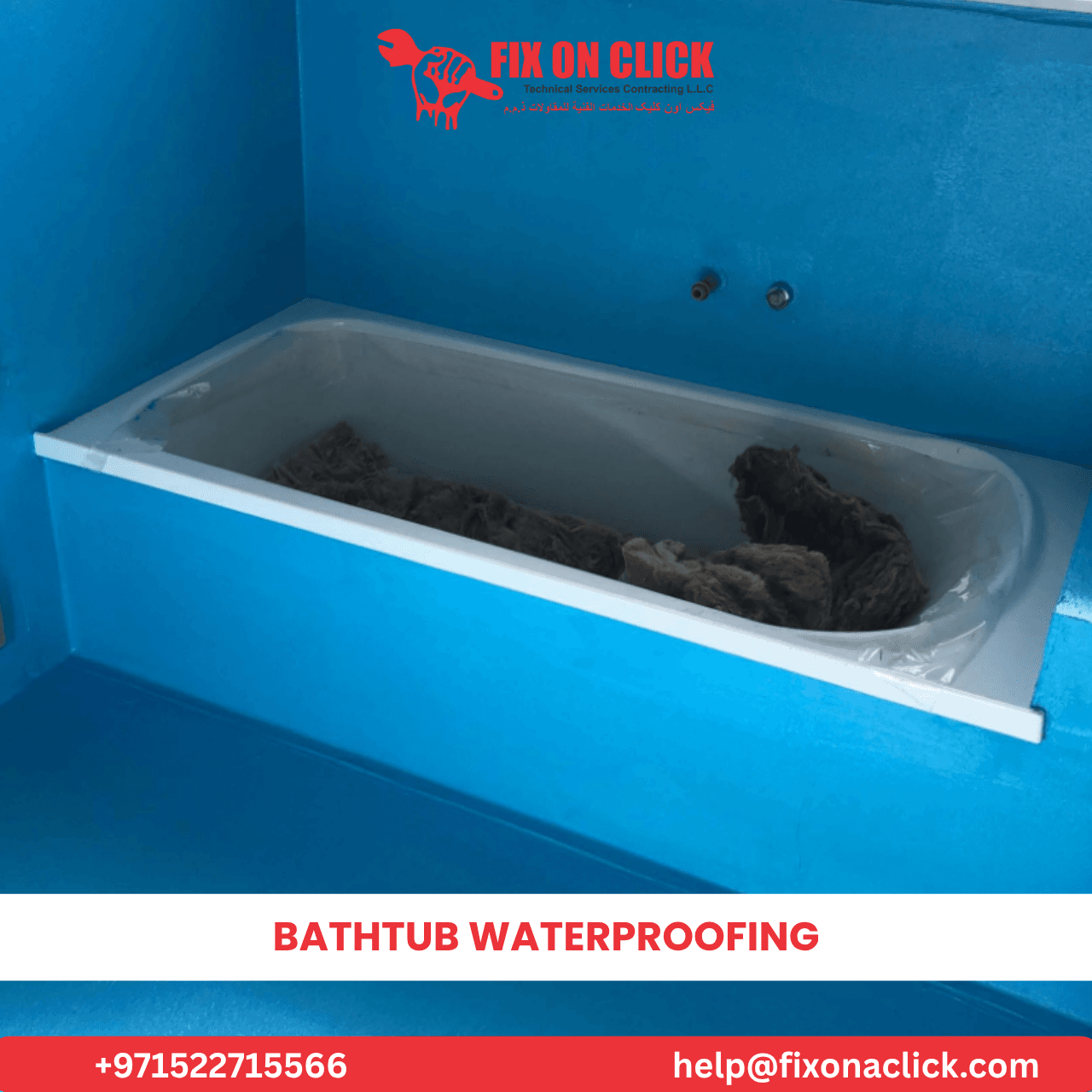
This is the big one. A waterproofing membrane is a coating or sheet material applied to the floor and lower walls of the bathroom before tiling. When it's applied incorrectly, too thin, or skipped entirely to save time and money during construction, water eventually works its way through the tile joints and into the structure below.
2. Cracked or Missing Sealant Around the Tub Edge
The silicone sealant that runs along where your bathtub meets the wall and floor tiles has a lifespan. Over time, it shrinks, cracks, or peels away, especially in areas exposed to constant moisture and temperature changes. Once that seal breaks, water slips straight through the gap.
3. Grout Deterioration
Grout is porous by nature. As it ages, it becomes more absorbent, allowing water to pass through into the layers beneath. Combined with a compromised membrane, deteriorating grout accelerates water infiltration significantly.
4. Poor Plumbing Connections
Sometimes the leak isn't from the surface at all – it's from the overflow drain, the waste pipe connection, or the tub's mixer valve. A loose fitting inside the wall cavity can leak steadily for a long time before it becomes visible.
5. Movement and Settling
Buildings shift slightly over time, especially in the first several years after construction. This movement can crack tile joints and sealant lines that were originally intact, opening up new pathways for water.
6. Incorrect Tub Installation
If the bathtub wasn't levelled or supported correctly during installation, it can shift under weight, straining the seal around its edges and eventually breaking it.
Our Bathtub Waterproofing Process at Fix On Click
We don't believe in shortcuts, and we definitely don't believe in slapping a bit of sealant on visible cracks and calling it a day. A proper waterproofing job means going deeper, literally, to fix the source of the problem instead of masking the symptoms. Here's how our team approaches every bathtub waterproofing project.
Step 1: Inspection and Leak Detection
Before any work begins, our technician carries out a detailed inspection of the bathtub area, the surrounding walls, the ceiling below (if accessible), and the plumbing connections. In cases where the source of the leak isn't obvious, we use moisture meters and, where needed, non-invasive leak detection methods to pinpoint exactly where water is entering, rather than guessing and opening up walls unnecessarily.
Step 2: Removing Compromised Materials
Once we've identified the problem area, we carefully remove the affected tiles, old sealant, and any deteriorated grout. If the underlying membrane has failed, this needs to come out too. We work carefully to avoid unnecessary damage to surrounding tiles that are still in good condition.
Step 3: Surface Preparation
The substrate – whether it's concrete, screed, or an existing tile bed – needs to be clean, dry, and structurally sound before any new waterproofing material goes down. We repair any cracks or unevenness at this stage, because applying a membrane over a compromised surface just sets up the next failure.
Step 4: Applying the Waterproofing Membrane
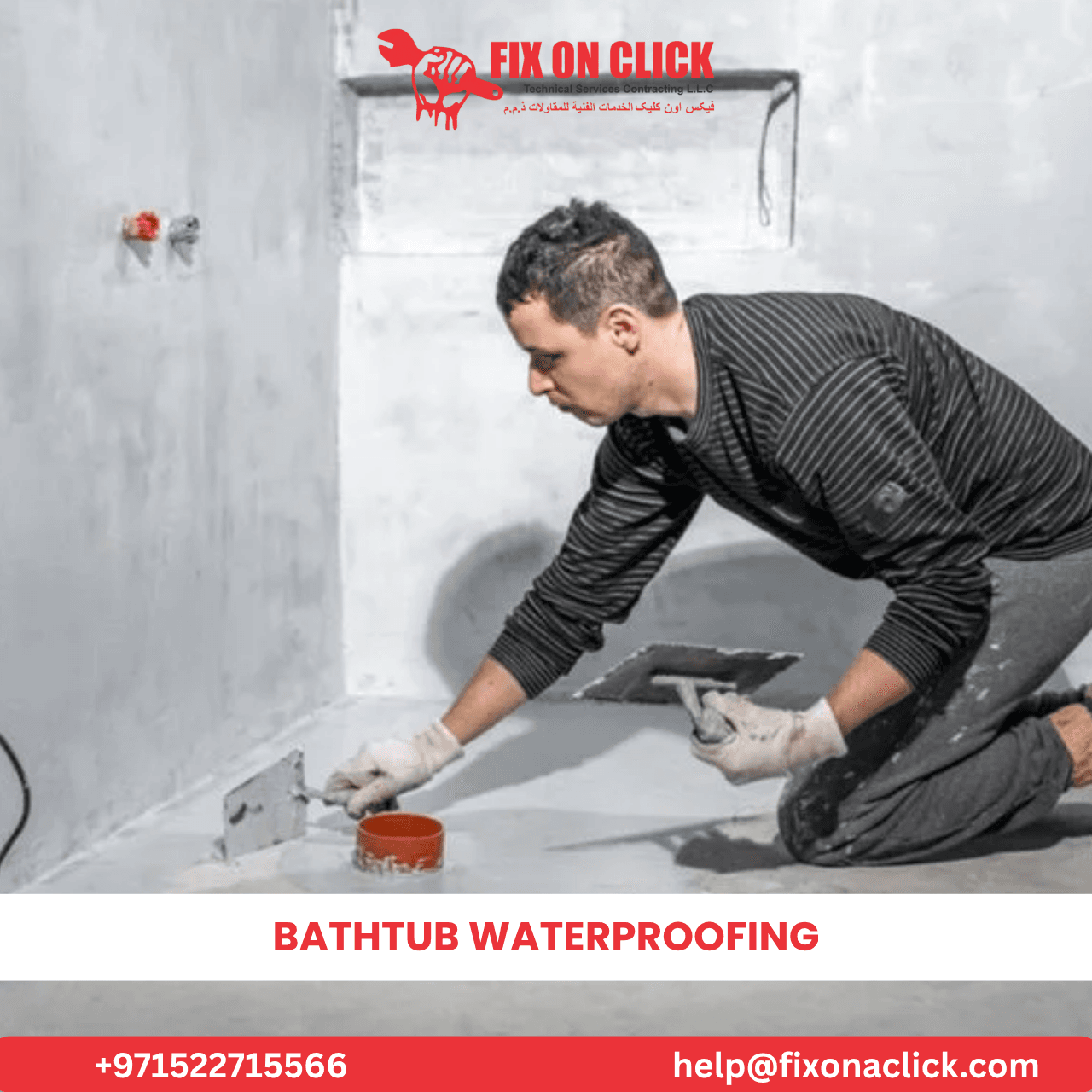
This is where the real protection happens. Depending on the specific situation, we apply a liquid-applied waterproofing membrane or a sheet membrane system, built up in multiple coats to the correct thickness. We pay particular attention to corners, the junction between floor and wall, and around the tub edge and drain outlet, since these are the points most prone to failure. We also reinforce these transition points with waterproofing tape or fabric mesh for extra strength.
Step 5: Curing Time
We don't rush this stage. The membrane needs adequate time to cure fully before tiling work resumes, because tiling over an under-cured membrane defeats the entire purpose of the job.
Step 6: Re-tiling and Sealing
Once the membrane has cured, we re-tile the area with proper adhesive suited for wet areas, then apply fresh, high-quality sealant around the bathtub edges, corners, and any fixture penetrations. This final sealant layer works together with the membrane underneath to give you two layers of protection instead of one.
Step 7: Testing
Before we consider the job complete, we test the area with water to confirm there's no seepage and that drainage is working exactly as it should. We won't sign off on a job until we're confident it will hold up.
Materials We Use
The quality of the waterproofing material matters just as much as the workmanship. We use cementitious and polyurethane-based waterproofing compounds that are specifically formulated for wet area applications, chosen based on the specific requirements of your bathroom – whether it's a standard residential bathtub, a sunken bath, or a hotel-grade installation with heavier usage demands. These materials are flexible enough to handle minor building movement without cracking, and they bond well to both concrete and existing tile substrates.
For sealant work, we don't use generic bathroom caulk that starts yellowing and cracking within a year. We use mould-resistant, flexible silicone sealants designed to hold up under constant moisture exposure and temperature swings common in Dubai bathrooms with AC running most of the year.
New Bathtub Installation Waterproofing
If you're installing a brand-new bathtub, whether as part of a full bathroom renovation or a standalone upgrade, waterproofing needs to be built into the process from the start, not treated as an afterthought once tiling is done. We work closely with plumbers and tilers during new installations to make sure the waterproofing membrane is applied correctly before the tub goes in and before any tiling begins around it.
This matters even more for sunken bathtubs or built-in tub-shower combinations, where the tub sits partially recessed into the floor structure. These setups have a higher risk of water pooling around the base if waterproofing isn't done meticulously, since gravity naturally pulls water toward the lowest point. We take extra care with slope, drainage, and membrane thickness in these installations to prevent future problems.
Renovation and Repair Waterproofing
Most of our bathtub waterproofing calls come from existing bathrooms where something has already gone wrong – a leak, mould, or damaged flooring. In these cases, we don't just patch the visible problem area. We assess how far the water damage has spread, because water rarely stays confined to the spot where it first entered. It's common to find that a leak near the tub has also affected the flooring several tiles away, or crept into the wall cavity shared with an adjacent room.
Our repair process addresses the full extent of the damage, not just the symptom you called us about. That's the difference between a repair that lasts and one you'll be calling someone back for within a year.
Common Areas That Need Extra Attention
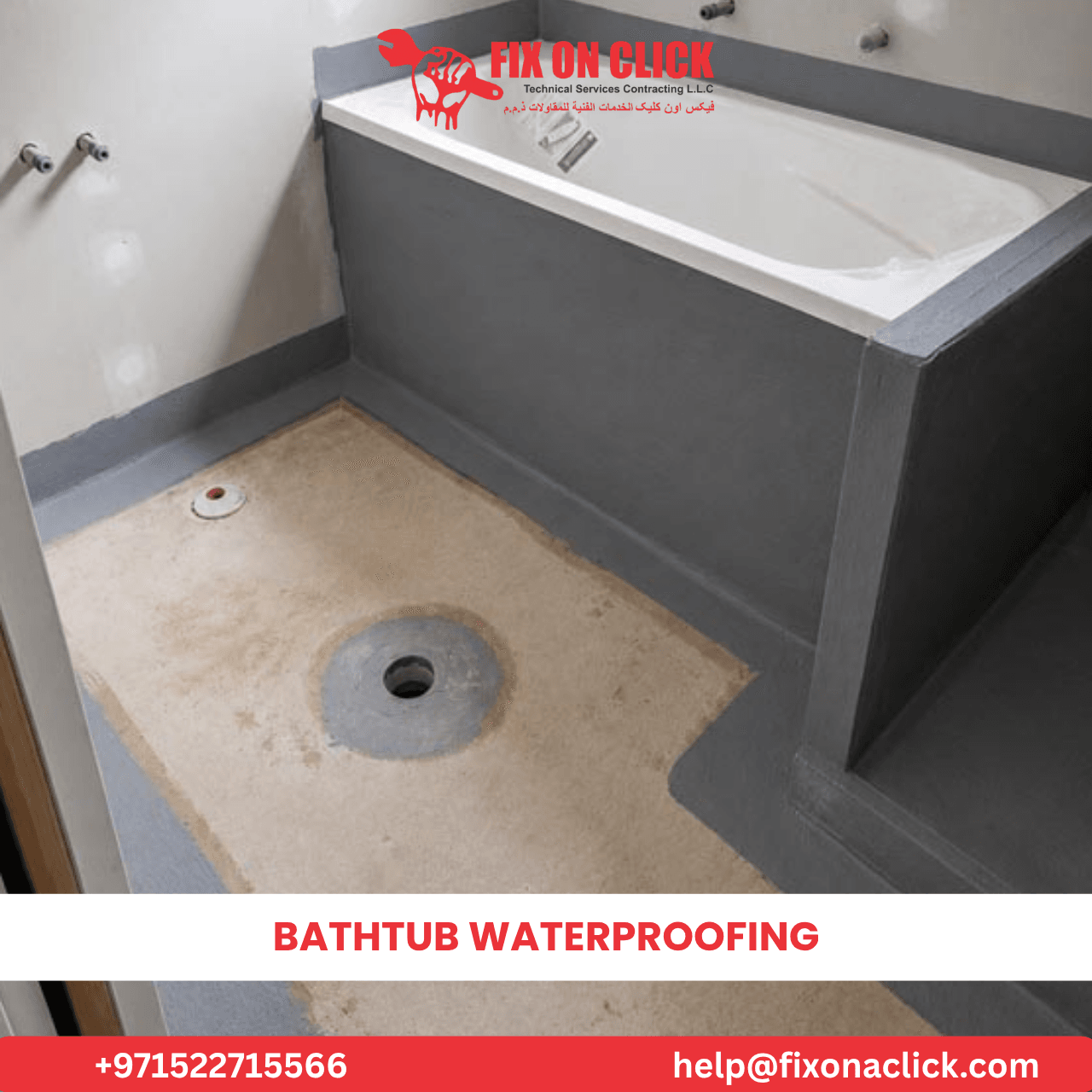
Certain spots around a bathtub are far more prone to leaks than others, and we make sure these get particular focus in every job.
The tub-to-wall junction
where the bathtub edge meets tiled walls, this is the single most common failure point.
Corners
internal corners in the shower or tub area experience more movement and stress than flat surfaces, making them prone to cracking.
Drain and overflow fittings
any fixture that penetrates the waterproofing layer creates a potential weak point if not sealed correctly.
Tap and mixer valve penetrations
similar risk as drains, these fittings need careful sealing where they pass through tiled surfaces.
Floor-to-wall transitions
the horizontal-to-vertical change in surface is a natural stress point that needs membrane reinforcement.
Why Choose Fix On Click for Bathtub Waterproofing in Dubai
Dubai has no shortage of handymen offering to seal up a leaky bathtub for a quick fee, but there's a real difference between someone applying a tube of sealant and a team that actually understands building waterproofing systems. Here's what sets Fix On Click apart.
Experienced, Trained Technicians
Our team has handled bathtub waterproofing across villas, apartments, hotels, and commercial properties throughout Dubai. We've seen just about every type of leak and failure point, which means we diagnose problems quickly and accurately instead of guessing.
Proper Diagnosis Before Any Work Begins
We never start ripping out tiles without first understanding exactly where and why water is getting in. This saves you money by avoiding unnecessary demolition and ensures the repair actually addresses the root cause.
Quality Materials, No Shortcuts
We use proper waterproofing membranes and sealants suited for wet area use, not generic products that fail within months. This is the same standard we'd want in our own homes.
Clean, Respectful Work
We understand a waterproofing job means someone's bathroom is out of use for a period of time. Our team works efficiently, keeps the work area protected, and cleans up properly once the job is done.
Fair, Transparent Pricing
You'll know the cost upfront before we start, with no surprise charges added halfway through the job.
Warranty on Our Work
We stand behind our waterproofing work, because we know a repair job is only worth something if it actually holds up over time.
Fast Response Across Every Corner of Dubai
Water damage doesn't wait for a convenient time, and neither do we. Fix On Click maintains a fleet of over 50 fully equipped service vehicles that are on standby across Dubai around the clock, ready to be dispatched the moment a client needs us. Whether you're in Downtown Dubai, Dubai Marina, Jumeirah, Arabian Ranches, Al Barsha, Business Bay, or anywhere else in the city, one of our vehicles is never far away. This means when you call us about a bathtub waterproofing issue, we're not scrambling to figure out logistics – we already have the manpower and equipment positioned to reach you quickly, assess the situation, and get to work without unnecessary delay. For a problem like a leaking bathtub that only gets worse the longer it's left unattended, that kind of fast, reliable response across every area of Dubai makes a real difference in preventing further damage to your property.
Preventing Future Bathtub Leaks
Once your bathtub waterproofing is sorted, a bit of regular maintenance goes a long way in keeping it that way for years to come.
Check the sealant around your tub every few months for early signs of cracking or peeling, and don't wait until it's fully gone before getting it redone.
Keep the bathroom ventilated after baths and showers to reduce trapped moisture and humidity buildup.
Avoid using harsh abrasive cleaners on grout lines, as these can wear down the surface faster and make it more porous over time.
Address small cracks in tiles or grout as soon as you spot them, rather than waiting for them to worsen.
Have your bathroom periodically checked by a professional, especially if your building is older or you've noticed any of the warning signs mentioned earlier in this page.
Book Your Bathtub Waterproofing Service Today
A leaking bathtub isn't something that fixes itself, and every day it's left unaddressed, the potential repair cost climbs a little higher. Whether you've spotted the early warning signs or you're dealing with a full-blown leak already causing visible damage, the Fix On Click team is ready to assess the situation and get it properly resolved.
Call us now at +971522715566 or visit fixonaclick.com to book your bathtub waterproofing service anywhere in Dubai. With our team of experienced technicians and a fleet of over 50 service vehicles ready across the city, help is closer than you think.