
Outdoor Interlock Services in Dubai by Fix On Click
Walk around any well-maintained villa community in Dubai, places like Arabian Ranches, Al Barari, or The Springs, and you will notice something most people do not consciously register: the driveways and pathways are not plain concrete. They are made up of individually laid interlocking pavers, fitted together in patterns that somehow manage to look both structured and natural at the same time. That is outdoor interlock, and it has become one of the most requested exterior upgrades across Dubai properties, both residential and commercial.
At Fix On Click, outdoor interlock work makes up a significant part of what we do throughout the year, from small garden pathway projects to full driveway and courtyard installations spanning hundreds of square meters. We have installed, repaired, and re-leveled interlock surfaces across almost every community in Dubai, and we have developed a genuine understanding of what makes interlock either last for fifteen years or start failing within eighteen months.
This page will walk you through what outdoor interlock actually involves, why so many Dubai property owners choose it over plain concrete or asphalt, the different paver types and patterns available, our installation process, common problems we get called out to fix, and honestly what you should expect to budget for a project like this.
What Exactly Is Outdoor Interlock
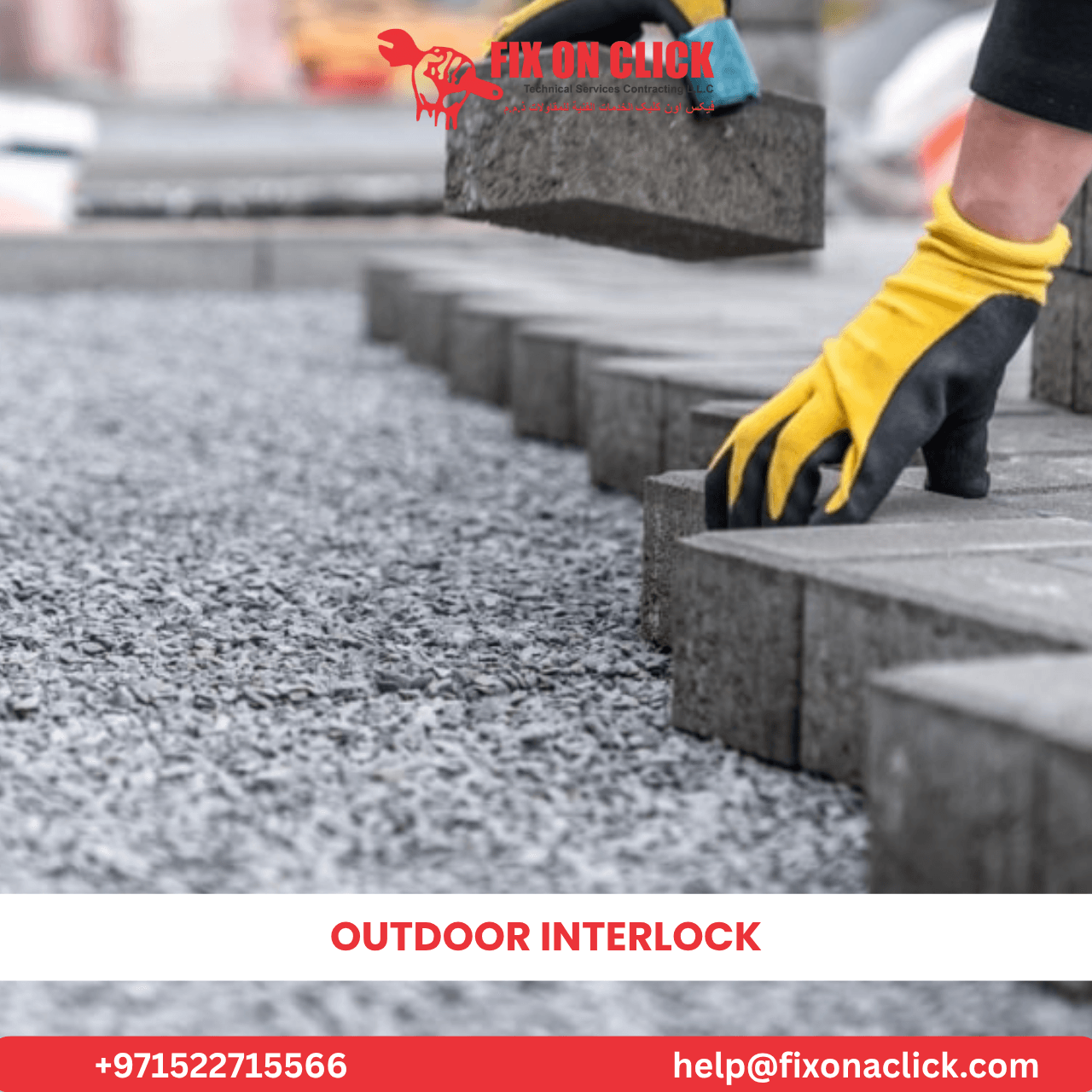
Interlock, sometimes called interlocking pavers or paver blocks, refers to individual concrete, stone, or clay units that are laid closely together in a pattern over a properly prepared base, without mortar joining them rigidly the way traditional tiles or bricks are set. The units interlock mechanically through their shape and the way they are fitted, along with sand or fine aggregate filling the joints between them.
This might sound like a small technical difference from regular paving, but it actually changes everything about how the surface behaves over time. Because the units are not rigidly bonded together, interlock pavement can flex slightly with ground movement, temperature changes, and minor settling without cracking the way a solid poured concrete slab would. If a section does get damaged or stained beyond repair, individual pavers can be lifted out and replaced without disturbing the surrounding area, something that is essentially impossible with poured concrete.
Why Outdoor Interlock Has Become So Popular Across Dubai
There are practical and aesthetic reasons behind why interlock has become the go-to choice for driveways, walkways, pool decks, and courtyards throughout Dubai.
It Handles Dubai's Ground Movement Better
Dubai's soil composition, particularly the sandy and sometimes expansive clay-influenced ground found in various parts of the city, causes more ground movement than people realize. Poured concrete slabs crack when the ground beneath shifts even slightly. Interlock pavers, because they are individual units rather than one continuous slab, tolerate this movement far better, flexing rather than fracturing.
Repairs Are Simpler and Cheaper
If a section of your driveway gets stained by an oil leak, cracked by a heavy vehicle, or sinks slightly due to poor drainage underneath, we can lift just the affected pavers, fix the underlying issue, and relay them without touching the rest of the surface. Try doing that with a poured concrete driveway and you will understand why this matters.
Design Flexibility
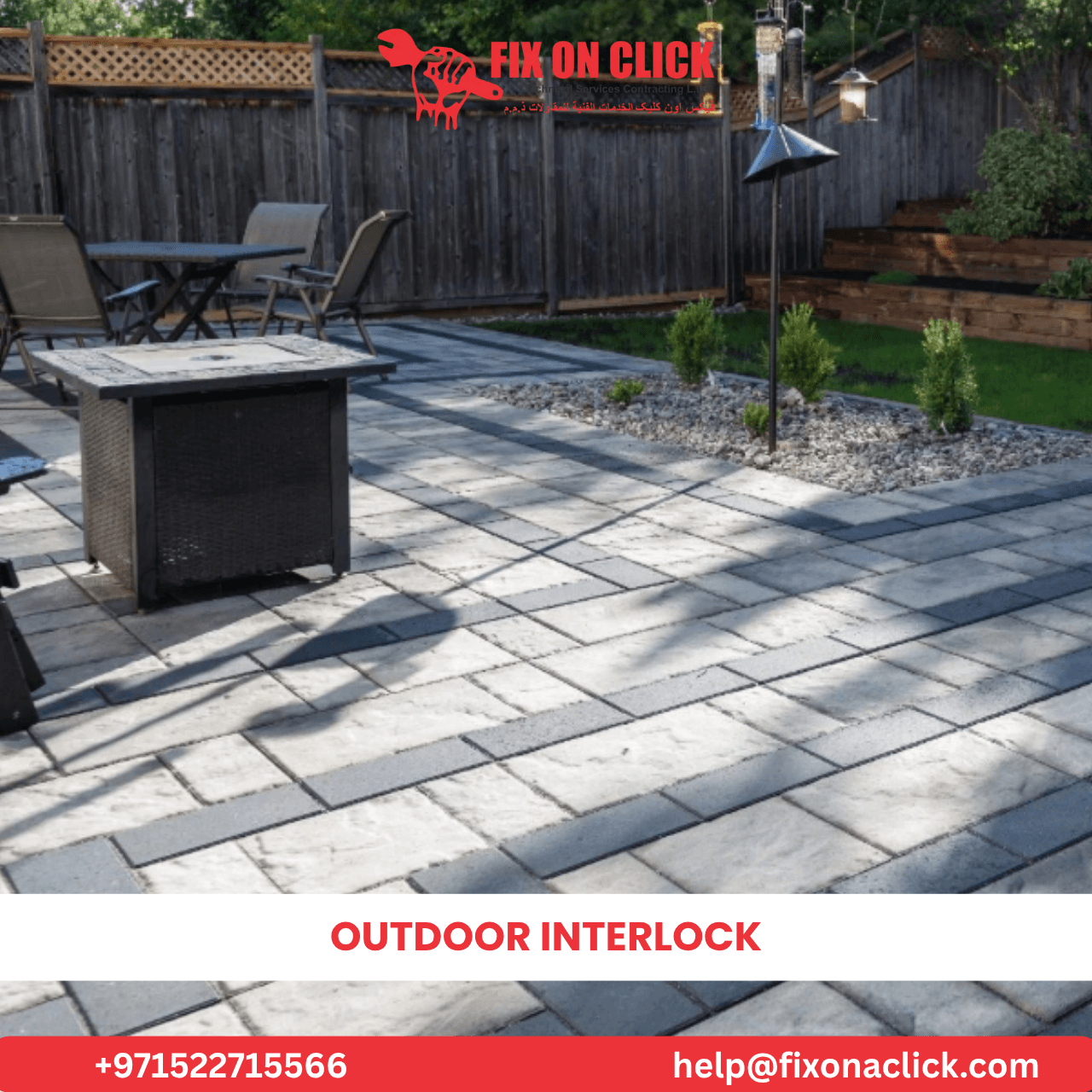
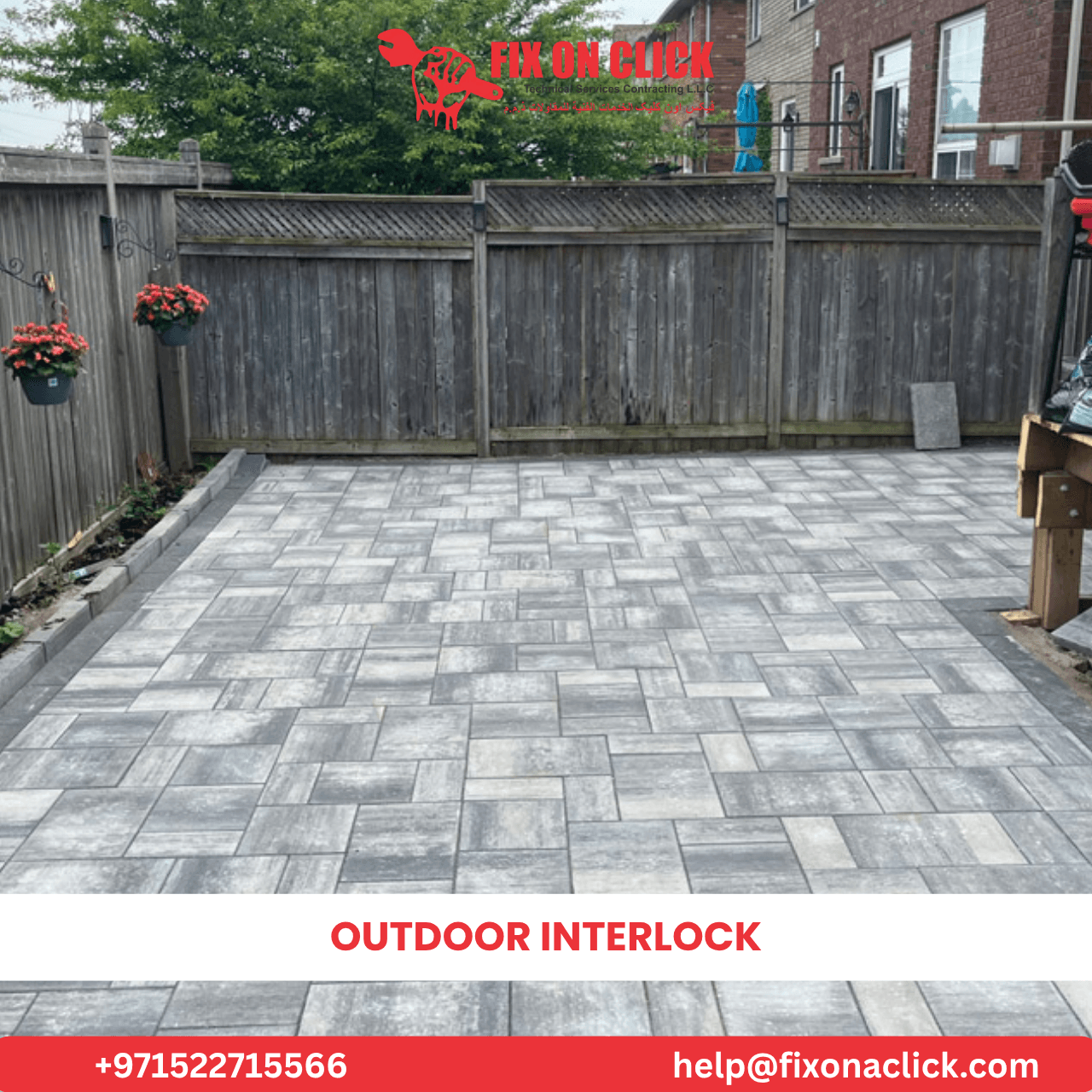
Interlock comes in an enormous range of colors, shapes, patterns, and textures. This means your driveway, garden path, or pool deck can actually be designed to complement your property's overall look rather than just being a functional grey slab. Herringbone patterns, running bond layouts, circular medallion designs for entrance areas, and mixed-color borders are all things we regularly design and install for clients.
Excellent for Dubai's Heat
Certain interlock paver types, particularly lighter colored concrete and specific stone options, reflect heat better than dark asphalt surfaces, which noticeably reduces surface temperature underfoot during Dubai's punishing summer months. This matters a lot for pool decks and walking areas where people are barefoot or in sandals.
Better Drainage Management
Interlock surfaces, especially when installed with permeable jointing sand or specific permeable paver systems, allow rainwater to filter through the joints into the ground below rather than pooling on the surface or overwhelming drainage systems, which has become increasingly relevant given Dubai's more frequent heavy rainfall events in recent years.
Types of Interlock Pavers We Work With
Choosing the right paver type depends on the area being paved, expected traffic, budget, and the aesthetic you are going for. Here is an overview of what we typically install across Dubai properties.
Concrete Interlock Pavers
The most commonly used option in Dubai due to their durability, affordability, and the sheer range of colors and finishes available. Concrete pavers can be manufactured to mimic natural stone at a fraction of the cost, and they handle heavy vehicle traffic extremely well, making them a solid choice for driveways.
Natural Stone Pavers
Options like granite, sandstone, and travertine offer a more premium, natural appearance with unique texture and color variation between individual pieces. These are popular for high-end villa entrances, garden pathways, and pool surrounds where clients want a more organic, upscale look.
Clay Brick Pavers
Clay pavers bring a warm, traditional aesthetic and are known for retaining their color well over time since the color runs through the entire unit rather than being just a surface coating. These work particularly well for pathway and courtyard designs going for a classic look.
Permeable Interlock Pavers
Specifically designed with gaps or porous structures that allow water to drain through the surface directly into the ground below, reducing surface runoff. These have become increasingly popular for driveways and parking areas as property owners look for more sustainable drainage solutions.
Rubber and Composite Pavers
Less common but growing in popularity for specific applications like children's play areas, these offer a softer, more impact-absorbent surface while still maintaining the interlocking installation method.
Where Outdoor Interlock Works Best
Driveways
This is probably the single most common application we handle. A well-designed interlock driveway instantly upgrades a property's curb appeal while providing a surface that can handle daily vehicle traffic, occasional heavy loads during moving or delivery, and years of sun exposure without significant fading or cracking.
Garden Pathways
Interlock pathways through gardens or side yards give a finished, intentional look to outdoor spaces that would otherwise just be dirt or gravel paths. We often incorporate curves and organic shapes here since pathways do not need to follow the strict straight lines that driveways typically require.
Pool Decks and Surrounds
Pool areas need slip-resistant, heat-reflective surfaces that can handle constant water exposure and pool chemical splashing. Certain textured concrete and natural stone pavers are ideal here, and we always factor in proper slope for water drainage away from the pool edge.
Courtyards and Outdoor Entertainment Areas
Majlis outdoor seating areas, barbecue zones, and general courtyard spaces benefit enormously from interlock, both for the finished appearance and for practical reasons like easy cleaning and durability under outdoor furniture weight.
Commercial Parking Areas and Walkways
For commercial properties, interlock parking areas and walkways offer a more polished appearance than plain asphalt while providing better long-term durability under constant vehicle and foot traffic.
Our Outdoor Interlock Installation Process
Interlock might look simple once it is finished, but a huge amount of what determines whether it lasts for decades or starts failing within a couple of years happens below the surface, in steps most property owners never actually see.
Step 1: Site Assessment and Design Planning
We start by assessing the area, discussing the intended use, expected traffic load, and design preferences with the client. For driveways specifically, we factor in vehicle weight and turning patterns, since these affect base thickness requirements.
Step 2: Excavation
The existing ground surface is excavated to the appropriate depth, which varies depending on whether the area will handle pedestrian traffic only or vehicle loads. Getting this depth right is critical, since insufficient excavation is one of the leading causes of interlock failure.
Step 3: Base Preparation and Compaction
A layer of crushed aggregate base material is laid and compacted thoroughly using mechanical plate compactors. This base layer is what actually bears the load of everything above it, and inadequate compaction here is probably the single biggest reason interlock surfaces sink, shift, or develop uneven areas over time.
Step 4: Edge Restraint Installation
Edge restraints, whether concrete curbing, plastic edging, or steel edging depending on the application, are installed around the perimeter of the paved area. These prevent the pavers from spreading outward over time under load, which is another common cause of interlock surfaces gradually losing their tight, uniform appearance.
Step 5: Bedding Sand Layer
A layer of coarse bedding sand is screeded evenly across the compacted base, providing the surface that pavers will actually sit on and be leveled against.
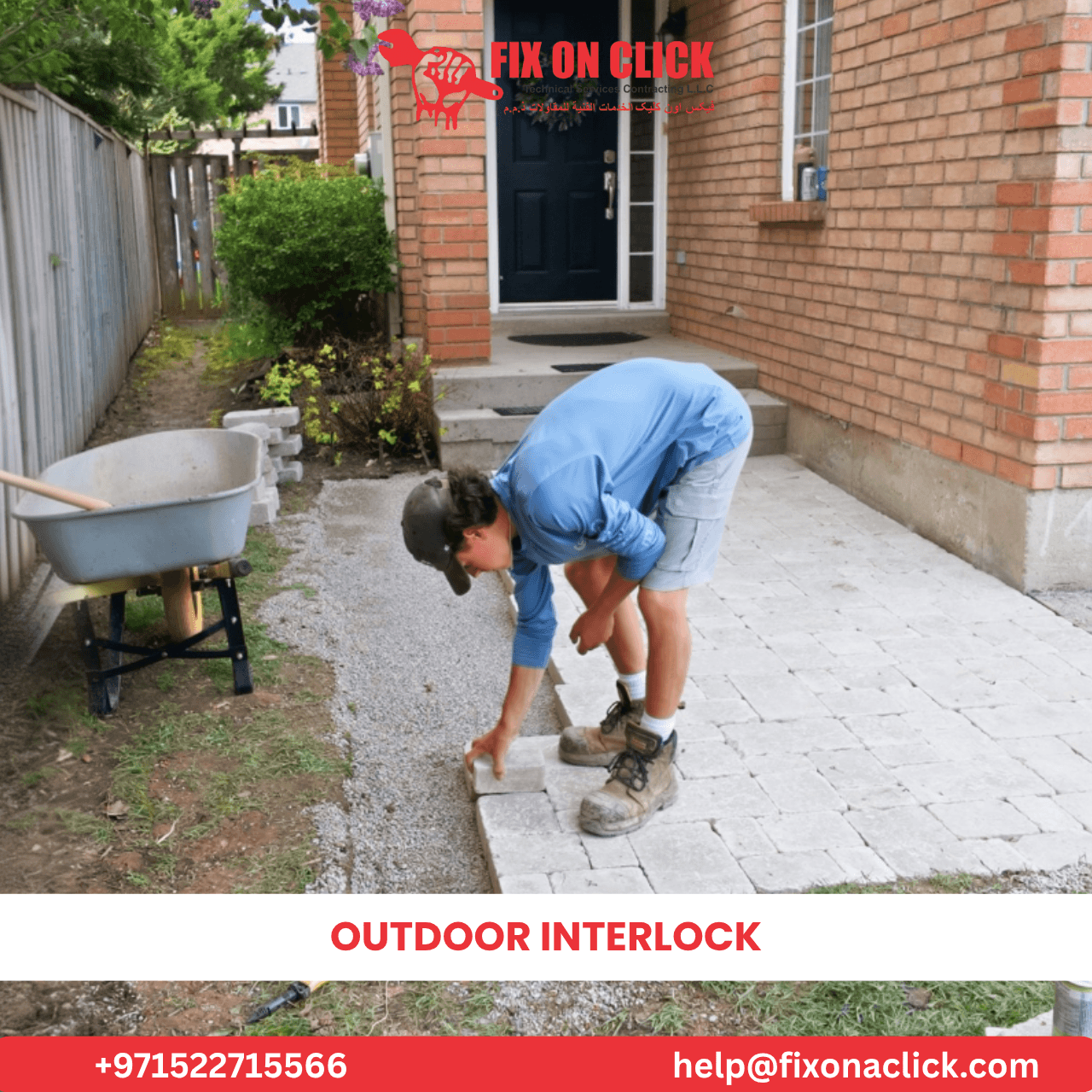
Step 6: Paver Laying
Pavers are laid according to the agreed pattern, starting from a fixed reference point and working outward methodically to maintain straight lines and consistent joint spacing throughout the installation.
Step 7: Cutting and Fitting Edge Pieces
Along borders and around obstacles like drains, tree wells, or curves, pavers need to be cut to fit precisely. This is done using diamond blade saws for clean, accurate cuts rather than rough breaks that would leave gaps or unstable edge pieces.
Step 8: Compacting the Laid Pavers
Once laying is complete, the entire surface is compacted again using a plate compactor with a protective pad to avoid damaging the paver surface. This settles the pavers firmly into the bedding sand and helps lock the entire surface together.
Step 9: Joint Sand Application
Fine jointing sand is swept across the surface and worked into the gaps between pavers, either through vibration from the compactor or manual brushing. This sand is what actually gives interlock its mechanical interlocking strength, hence the name.
Step 10: Sealing (Optional but Recommended)
For many projects, we recommend applying a paver sealant that enhances color, provides UV protection, and makes the surface easier to clean while also helping to lock the jointing sand in place against wind and rain erosion.
Common Outdoor Interlock Problems We Get Called For
A significant portion of our interlock work in Dubai is actually repair and restoration of existing surfaces that were either installed poorly originally or have simply aged without proper maintenance.
Sunken or Uneven Pavers
Usually caused by inadequate base compaction during original installation, or from erosion of the base material due to poor drainage. We excavate the affected area, correct the base, and relay the pavers to match the surrounding level.
Weed Growth Between Pavers
Over time, especially if jointing sand has eroded, weeds and grass can start growing between pavers. We clean out the joints thoroughly and refill with fresh jointing sand, sometimes incorporating a polymeric sand that resists weed growth better than standard sand.
Cracked or Chipped Individual Pavers
Heavy impact, vehicle damage, or manufacturing defects can cause individual pavers to crack. These can be lifted out and replaced with matching units without disturbing the rest of the surface.
Faded Color
Prolonged sun exposure gradually fades paver color, particularly with lower quality concrete pavers that were not manufactured with UV-resistant pigments. Sealing can restore and protect color, and in some cases we recommend a color-enhancing sealer specifically for this purpose.
Drainage Issues and Pooling Water
If a driveway or pathway was not installed with correct slope, water can pool on the surface after rain. We assess and correct the slope by relaying affected sections with proper grading toward drainage points.
Loose or Shifting Edge Pavers
When edge restraints were not properly installed or have deteriorated, border pavers can start shifting outward. We reinstall proper edge restraint and relay affected border sections.
50+ Service Vehicles Ready Across Dubai for Immediate Response
Outdoor projects like interlock installation and repair often come with time pressure, whether it is an upcoming event at your property, a driveway that has become genuinely unsafe due to uneven pavers, or simply wanting the work done before extreme summer heat makes outdoor labor more difficult. This is exactly why Fix On Click operates a fleet of more than 50 fully equipped service vehicles stationed strategically across Dubai, ready to respond quickly wherever our clients need us.
From Dubai Marina to Mudon, from Al Warqa to Damac Hills, our distributed fleet means we are never far from wherever your property is located. For interlock work specifically, this rapid response capability lets us get technicians out for site assessments and measurements quickly, so your project can move from initial inquiry to a confirmed quote and scheduled start date without the frustrating multi-week delays that smaller, less organized contractors often cause.
Our vehicles carry core tools and equipment needed for smaller repair jobs to be handled on the same visit in many cases, while larger installation projects are scheduled with full crews and material deliveries coordinated efficiently thanks to our established logistics across the city. Whether you need urgent repair on a driveway section that has become a trip hazard, or you are planning a full courtyard renovation, our team's citywide presence means help is genuinely close by, not just a marketing promise.
Cost Factors for Outdoor Interlock Projects
Interlock project costs vary considerably based on several factors, and while we always recommend a proper site visit for an accurate quote, here is what generally influences pricing.
Area size
Larger areas generally have a lower cost per square meter due to efficiencies in labor and material ordering, though total project cost naturally increases with size.
Paver type and quality
Basic concrete pavers cost significantly less than natural stone or premium clay options.
Pattern complexity
Simple running bond patterns are more economical than intricate herringbone or medallion designs requiring more cutting and precision.
Base preparation requirements
Areas needing significant excavation, soil correction, or drainage work will cost more than sites with good existing ground conditions.
Site accessibility
Areas that are difficult for equipment and material delivery to access can increase labor time and cost.
Additional features
Border details, edge restraints, sealing, and drainage channel integration all add to the overall project cost.
We provide free, detailed quotes after assessing your specific site, so you know exactly what you are paying for before committing to the project.
Maintaining Your Outdoor Interlock Surface
Regular Sweeping and Cleaning
Sweep debris and dust regularly, and periodically wash the surface with water and a mild detergent to prevent dirt buildup that can eventually stain the paver surface.
Address Weeds Early
Remove any weed growth between joints as soon as it appears, before root systems have a chance to establish and potentially disturb the paver positioning.
Reapply Jointing Sand as Needed
Jointing sand naturally erodes over time due to rain and foot traffic. Topping it up periodically maintains the structural interlock and prevents individual pavers from shifting.
Reseal Every Few Years
Depending on the sealant used and exposure conditions, resealing every three to five years helps maintain color, water resistance, and overall surface protection.
Address Drainage Issues Promptly
If you notice water pooling in any area after rain, do not ignore it. Standing water can gradually erode the base material beneath the pavers, leading to sinking or shifting that becomes more expensive to fix the longer it is left unaddressed.
Why Choose Fix On Click for Outdoor Interlock in Dubai
Proven Installation Standards
We follow proper base preparation and compaction procedures that many rushed installations skip, ensuring your interlock lasts for years, not months.
Wide Range of Paver Options
From budget-friendly concrete pavers to premium natural stone, we help you choose the right material for your space and budget.
Custom Design Capability
We work with you to design patterns and layouts that complement your property's overall aesthetic rather than offering generic, one-size-fits-all designs.
Repair and Restoration Expertise
We do not just install new interlock, we fix existing surfaces that other contractors got wrong the first time.
Citywide Rapid Response
Our fleet of 50 plus service vehicles ensures quick assessment and scheduling no matter where in Dubai your property is located.
Transparent Pricing
Clear, itemized quotes with no hidden costs added once work has started.
Get Your Outdoor Interlock Project Started Today
Whether you are planning a brand-new driveway, want to upgrade your garden pathway, or need repair work on an existing interlock surface that has started showing its age, Fix On Click is ready to deliver quality craftsmanship backed by fast, reliable service across every area of Dubai.
Call us today at +971 52 271 5566 to book a free site assessment, or visit fixonaclick.com to explore our full range of exterior and maintenance services.