
Washroom Tiling Services in Dubai by Fix On Click
Of all the rooms in a home or commercial property, the washroom is probably the one place where poor tiling work becomes obvious the fastest. It is a small, enclosed space where every wall and floor tile is right there at eye level, constantly exposed to water, and used multiple times a day by everyone in the household. Cut corners in a washroom and you will notice, whether it is grout that starts staining within weeks, tiles that feel loose underfoot, or a slope that leaves water pooling near the drain instead of flowing away properly.
At Fix On Click, washroom tiling is one of our most consistently requested services across Dubai, and for good reason. Nearly every renovation project, whether it is a small apartment refresh or a full villa remodel, includes washroom work somewhere in the scope. We have tiled everything from compact guest washrooms in apartments across Dubai Marina to expansive master bathroom suites in villas throughout Emirates Hills, and we approach every single one with the same attention to waterproofing, slope, and finishing detail regardless of the project size.
This page covers what you need to know about washroom tiling in Dubai, including material choices, our full installation process, common problems we get called to fix, and what actually determines the cost of a project like this.
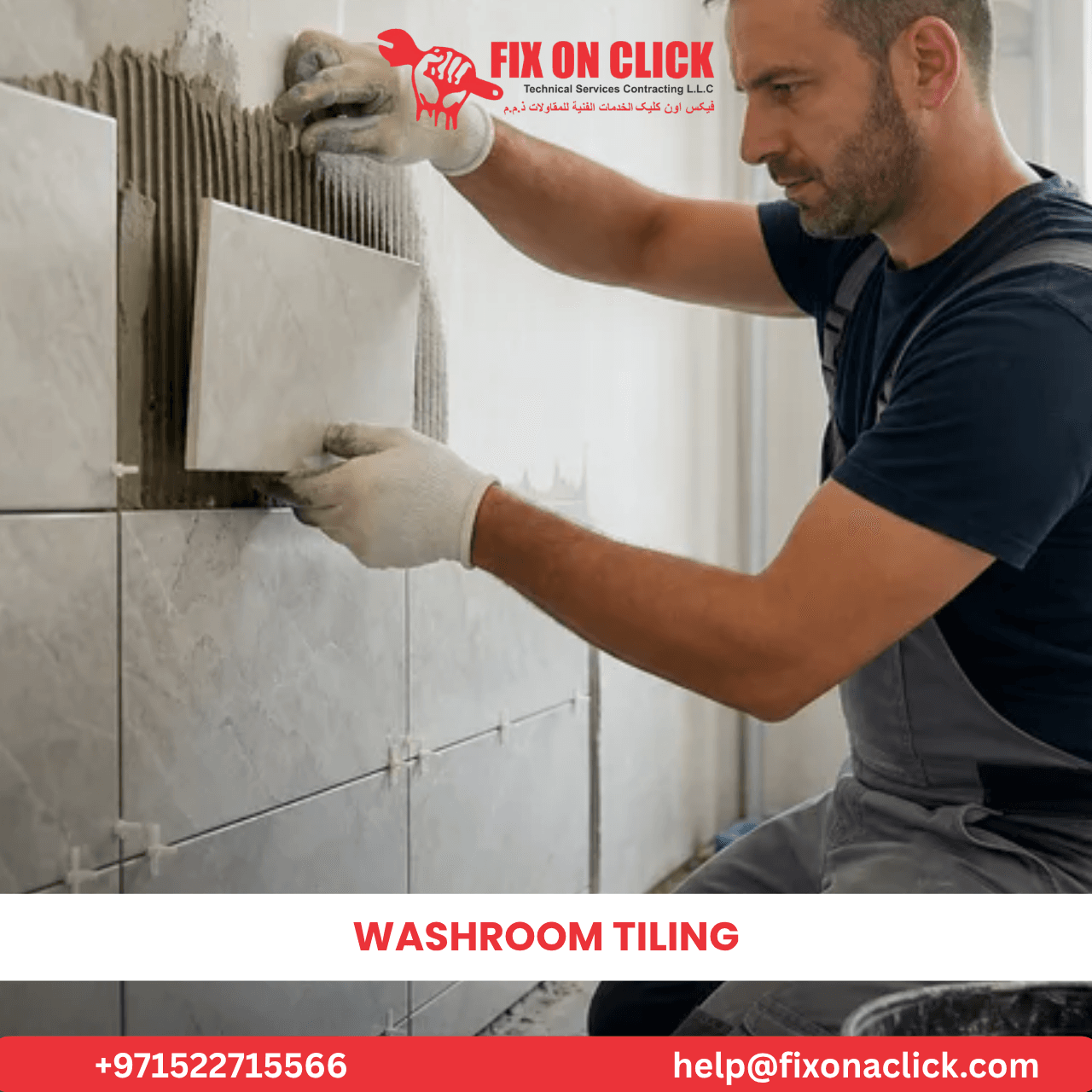
Why Washroom Tiling Requires Special Attention
Washrooms are functionally different from almost every other room in a property, and this affects how tiling needs to be approached from the very beginning of the project.
Constant Water Exposure
Unlike living areas or bedrooms, washroom floors and shower walls deal with direct water exposure regularly, sometimes multiple times a day in busy households. This means waterproofing beneath the tiles is not optional, it is essential to preventing water damage to the structure beneath and adjacent rooms.
Proper Slope for Drainage
Washroom floors need to be sloped correctly toward floor drains to prevent water pooling, which can otherwise lead to slippery surfaces, mold growth, and eventually water seeping through grout lines into the sub-floor beneath.
Humidity and Moisture Cycling
Washrooms experience significant humidity swings, from steamy conditions during showers to drying out afterward, and this cycling puts stress on tile adhesive and grout that other rooms simply do not face to the same degree.
Small Space, High Visibility
Because washrooms are typically compact spaces, imperfections in tiling work are far more noticeable than they might be in a large open living area. Every cut, every grout line, every corner is close enough to examine in detail, which means precision matters enormously in this specific application.
Choosing the Right Tiles for Your Washroom
Ceramic Tiles
A cost-effective, widely used option for washroom floors and walls, ceramic tiles handle moisture well and come in an enormous range of designs, making them suitable for almost any washroom style or budget.
Porcelain Tiles
Denser and less porous than standard ceramic, porcelain tiles offer better water resistance and durability, making them a popular choice for washroom floors specifically, where moisture exposure and foot traffic are both significant factors.
Natural Stone Tiles
Marble, travertine, and other natural stone options bring an upscale, luxurious feel to washroom spaces, particularly popular for master bathroom suites in villas. These require proper sealing to handle the moisture-heavy washroom environment successfully.
Mosaic Tiles
Small format mosaic tiles work particularly well for shower floors and curved or irregular surfaces where larger tiles would require excessive cutting, and they also provide better slip resistance due to the increased number of grout lines across the surface.
Large Format Tiles
For washrooms where a clean, modern, minimal-grout-line appearance is desired, large format tiles create a more expansive, seamless look, particularly effective in larger master bathroom layouts.
Textured and Anti-Slip Tiles
Given how frequently washroom floors get wet, selecting tiles with appropriate slip resistance ratings, particularly for shower floor areas, is a genuine safety consideration that should never be overlooked in favor of aesthetics alone.
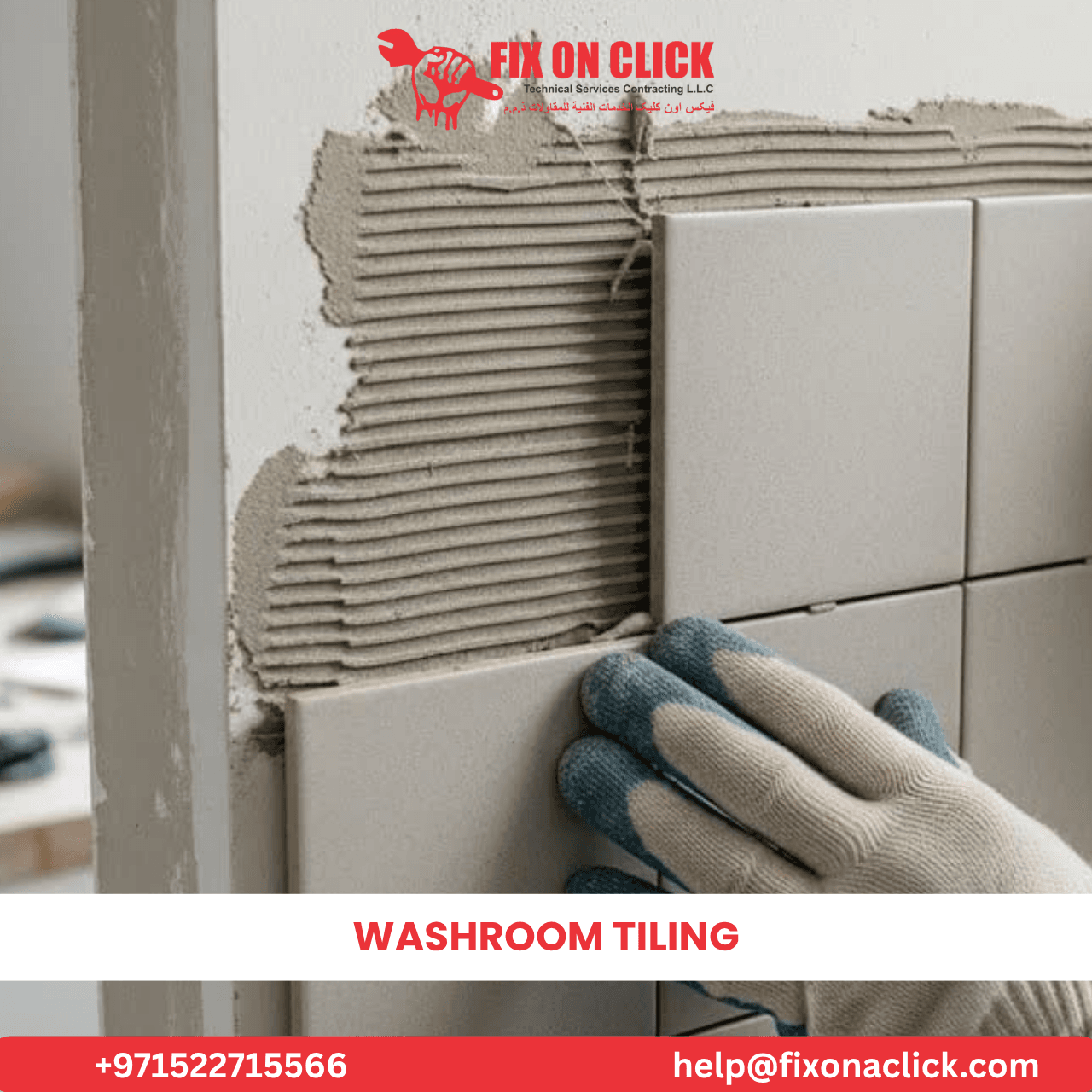
Our Washroom Tiling Process, Step by Step
Every washroom tiling project we undertake follows a careful, methodical process designed to ensure lasting results that hold up to the specific demands of this high-moisture environment.
Step 1: Design Consultation and Material Selection
We start by discussing your design preferences, budget, and any specific functional requirements, helping you select tile types, sizes, and finishes appropriate for both the washroom floor and walls, including any shower or bathtub surround areas.
Step 2: Removing Existing Tiles and Fixtures
For renovation projects, existing tiles, fixtures, and any old adhesive residue are removed completely, exposing the bare wall and floor surfaces for proper inspection and preparation.
Step 3: Surface Inspection and Repair
The underlying walls and floor are checked for any structural issues, cracks, or moisture damage that needs to be addressed before new tiling work begins.
Step 4: Waterproofing Application
This is arguably the single most critical step in washroom tiling. A proper waterproofing membrane is applied across floor areas and shower wall zones, creating a protective barrier that prevents water from reaching the structural elements beneath, regardless of any future grout wear or minor tile issues.
Step 5: Floor Slope Correction
Where necessary, floor screed is applied and shaped to create the correct slope toward floor drains, ensuring water flows away properly rather than pooling anywhere across the washroom floor.
Step 6: Layout Planning
Before tiles are permanently fixed, we plan the layout carefully to ensure a balanced, symmetrical appearance, particularly important in washrooms where awkward tile cuts near visible corners or fixtures would be immediately noticeable given the room's compact size.
Step 7: Wall Tile Installation
Wall tiles are installed first in most washroom projects, using appropriate adhesive and maintaining consistent spacing throughout, with careful attention paid to corners, niches, and any decorative feature areas.
Step 8: Floor Tile Installation
Floor tiles are then installed over the properly waterproofed and sloped substrate, ensuring proper adhesion and level placement throughout, with particular attention paid to the transition areas near the shower or bathtub.
Step 9: Cutting Tiles Around Fixtures
Precise cuts are made around plumbing fixtures, drains, and any other obstacles, using appropriate cutting tools to achieve clean, professional-looking edges rather than rough cuts that would leave visible gaps.
Step 10: Grouting
Grout appropriate for wet environments is applied between tiles, with careful attention to achieving consistent, clean grout lines throughout both wall and floor surfaces.
Step 11: Sealing Grout Lines
Once grout has cured, a sealant is applied to protect against water absorption and staining, which is particularly important in washroom environments given the constant moisture exposure these surfaces face.
Step 12: Final Inspection and Fixture Reinstallation
The completed tiling is inspected thoroughly, and any fixtures like sinks, toilets, or shower fittings are reinstalled or connected as part of finishing the overall washroom renovation.
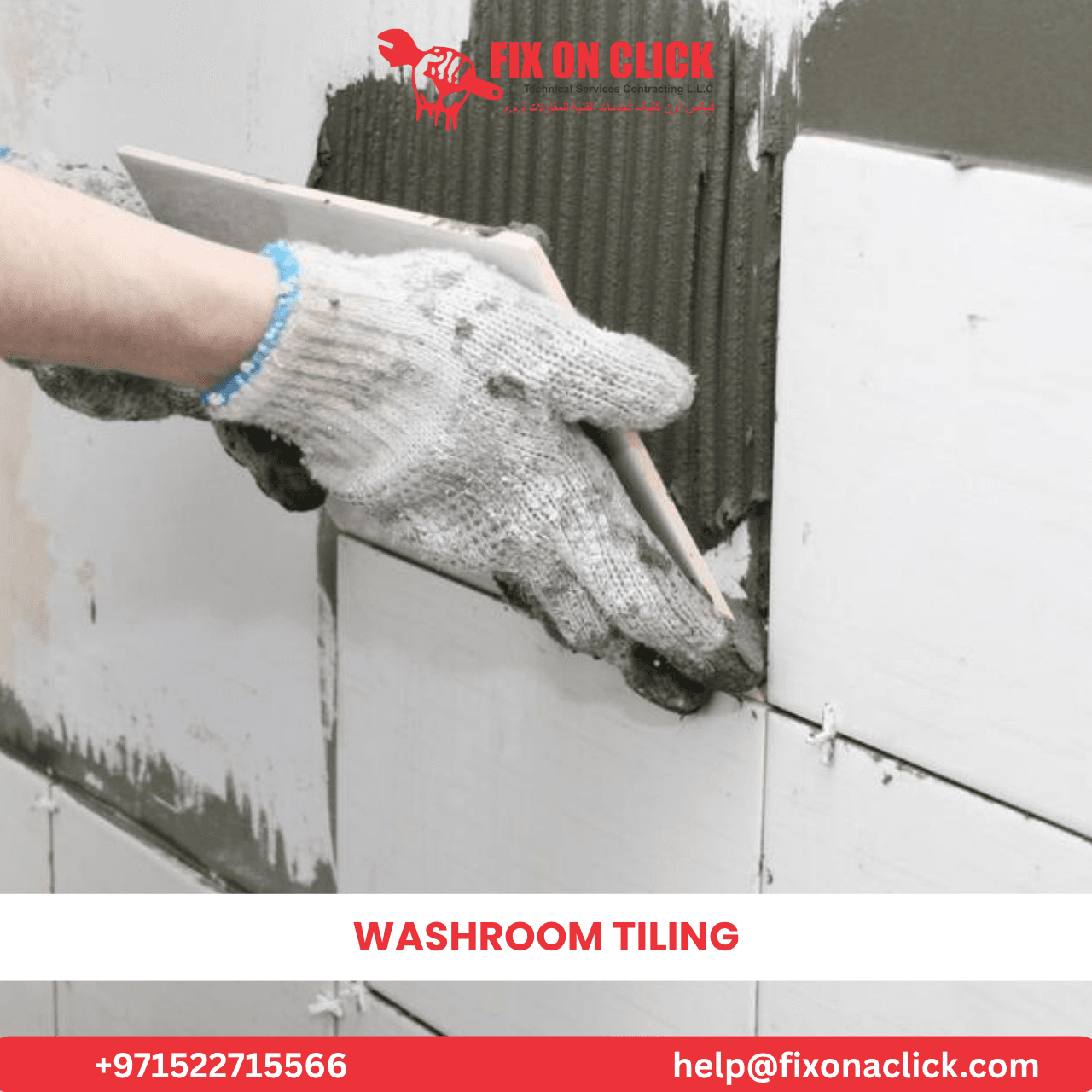
Common Washroom Tiling Problems We Fix
Water Leaking Through to Adjacent Rooms
This serious issue typically indicates a waterproofing failure beneath the tile surface, often from the original installation not including proper waterproofing membrane application. Fixing this requires removing affected tiles, correcting the waterproofing, and reinstalling tiling properly.
Cracked or Loose Tiles
Cracking can result from structural movement, impact damage, or tiles that were installed with insufficient adhesive coverage. Loose tiles, identified by a hollow sound when tapped, indicate adhesive failure and need to be addressed before they fully detach.
Moldy or Discolored Grout
Persistent moisture combined with inadequate ventilation or grout sealing creates ideal conditions for mold growth in washroom grout lines. Deep cleaning, regrouting, or applying mold-resistant grout sealant can resolve this ongoing issue.
Poor Drainage and Water Pooling
When washroom floors were not sloped correctly during original installation, water pools near drains instead of flowing away, creating slip hazards and accelerating grout deterioration. Correcting this requires addressing the floor slope, which typically means removing and relaying the affected floor area.
Tile Lippage in Shower Areas
Uneven tile edges create discomfort underfoot, particularly noticeable in shower areas where people are standing barefoot on wet surfaces. This can be corrected through grinding or, in more significant cases, relaying the affected section.
Outdated or Damaged Tile Aesthetics
Sometimes tiling is structurally fine but simply looks dated or has accumulated enough wear that a refresh is desired as part of a broader washroom renovation, giving the space a completely updated appearance.
Washroom Tiling for Different Property Types
Apartments
Apartment washrooms are often more compact, requiring careful layout planning to maximize the visual impact of tile choices within a smaller footprint, along with particular attention to waterproofing given the presence of neighboring units below.
Villas
Villa washrooms, particularly master bathroom suites, often involve larger spaces with more design flexibility, sometimes incorporating premium natural stone, feature walls, or more elaborate layouts compared to standard apartment washrooms.
Commercial Properties
Washrooms in offices, retail spaces, and hospitality properties need to handle higher usage volumes while maintaining a professional, clean appearance, often requiring more durable tile selections and careful attention to easy-maintenance grout choices.
Rental and Investment Properties
For landlords and property managers, durable, easy-to-maintain washroom tiling reduces ongoing maintenance costs and complaints between tenants, making practical material selection particularly important for these projects.
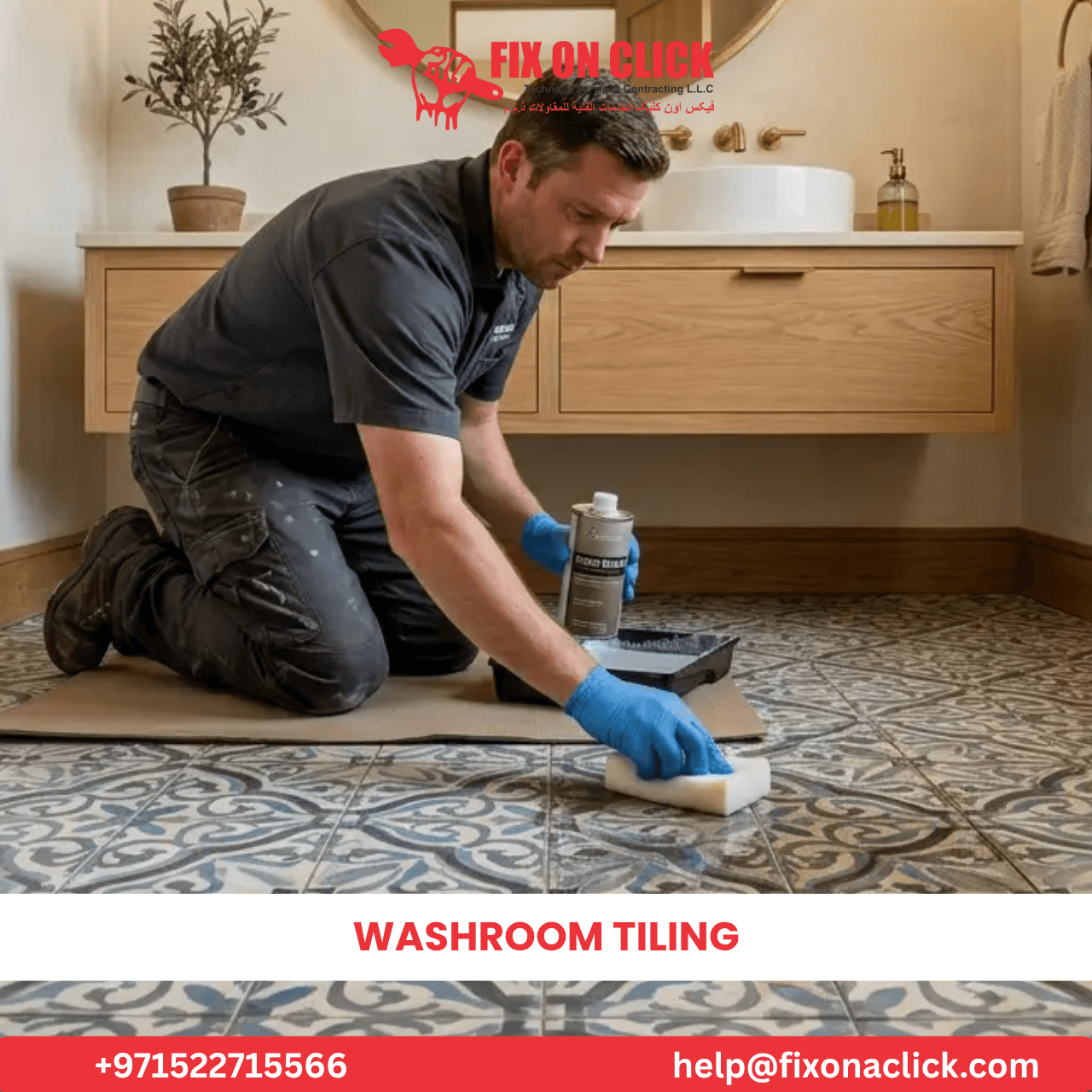
50+ Service Vehicles Ready Across Dubai for Immediate Response
Washroom issues, whether it is water leaking through to a room below, tiles that have suddenly come loose creating a safety hazard, or a renovation project you want completed on a specific timeline, often need quick attention. This is exactly why Fix On Click maintains a fleet of more than 50 fully equipped service vehicles positioned strategically across Dubai, ready to respond quickly wherever our clients need us.
Whether you are located in Al Nahda, Dubai Silicon Oasis, Jumeirah Village Circle, Business Bay, or virtually any other area across the emirate, our teams can reach your property promptly for assessment and project planning. Our carpentry division specifically maintains this fleet of over 50 service vehicles ready across every corner of Dubai, providing immediate response for clients who need carpentry work, such as vanity units, storage cabinetry, or bathroom shelving, coordinated alongside a washroom tiling renovation for a complete finished result.
For washroom tiling projects specifically, this rapid response capability means faster site visits and quotes, so your renovation timeline does not get stuck waiting for a contractor to simply show up and assess the space. Each vehicle carries essential tools for handling smaller repair jobs efficiently, while larger renovation projects are scheduled with dedicated crews and proper material coordination based on your washroom's specific design and requirements.
Cost Factors for Washroom Tiling in Dubai
Washroom tiling costs vary based on several factors, and we always recommend a proper site assessment for accurate pricing rather than relying on generic online estimates.
Washroom size
Larger washrooms naturally require more tile material and labor time.
Tile type and quality
Basic ceramic tiles cost significantly less than premium porcelain, natural stone, or imported specialty tiles.
Waterproofing scope
Comprehensive waterproofing for shower areas and floors is essential and factors into overall project cost, though it is never a step worth skipping to save money.
Existing condition and demolition needs
Renovation projects requiring removal of old tiles, fixtures, and addressing any hidden water damage will cost more than new construction tiling on a clean surface.
Layout complexity
Washrooms with multiple corners, niches, or decorative feature areas require more labor time than simple, straightforward layouts.
Fixture coordination
If plumbing fixtures need to be removed and reinstalled as part of the project, this adds to overall coordination and cost.
We provide free, transparent quotes after assessing your specific washroom, ensuring you understand exactly what is included before any work begins.
Maintaining Your Washroom Tiling
Ensure Proper Ventilation
Good ventilation, whether through an exhaust fan or window, helps manage humidity levels and reduces the risk of mold growth in grout lines over time.
Clean Regularly with Appropriate Products
Regular cleaning with tile and grout-safe cleaning products helps prevent buildup of soap scum, mineral deposits, and mold, keeping your washroom tiling looking fresh for longer.
Address Grout Issues Early
If you notice grout starting to discolor, crack, or show signs of mold, addressing this promptly through cleaning, resealing, or regrouting prevents more extensive water damage issues down the line.
Reseal Grout Periodically
Given the constant moisture exposure in washrooms, we recommend resealing grout every one to two years to maintain proper water resistance and staining protection.
Fix Leaks Immediately
Any sign of water leaking beyond the washroom, whether visible on ceilings below or in adjacent rooms, should be addressed immediately with a professional assessment, since this typically indicates a waterproofing failure that will worsen if left unaddressed.
Why Choose Fix On Click for Washroom Tiling
Proper Waterproofing Standards
We never compromise on waterproofing application, ensuring your washroom is properly protected against water damage for years to come.
Skilled, Detail-Oriented Installers
Given how visible washroom tiling imperfections are in such a compact space, our team brings genuine precision to every project.
Wide Range of Material Options
From budget-friendly ceramic to premium natural stone, we help you select the right materials for your washroom's specific needs and budget.
Comprehensive Renovation Coordination
Beyond tiling alone, we can coordinate plumbing, carpentry, and other trades needed for a complete washroom renovation.
Citywide Rapid Response
Our fleet of over 50 service vehicles ensures fast assessment and scheduling regardless of your property's location in Dubai.
Transparent, Fair Pricing
Clear, detailed quotes with no hidden costs added once work has started.
Get Your Washroom Tiling Project Started Today
Whether you are renovating an outdated washroom, dealing with water damage from a previous poor installation, or building out a new washroom as part of a larger construction project, Fix On Click delivers meticulous tiling craftsmanship backed by fast, reliable service across every part of Dubai.
Call us today at +971 52 271 5566 to schedule a free site assessment, or visit fixonaclick.com to explore our complete range of tiling and renovation services.