
Water Tank Repair in Dubai
A leaking or damaged water tank does not just waste water — it can contaminate your supply, damage the surrounding structure and create a health risk that gets worse the longer it runs. Fix On Click repairs all types of water tanks in Dubai: concrete, plastic, GRP fiberglass and underground tanks. We diagnose the problem accurately, use the right materials for the tank type, and price everything transparently before starting work.
Why Your Water Tank Needs Attention
Most water tanks in Dubai sit on rooftops or underground and get looked at only when something obvious goes wrong — a visible leak, low water pressure or discoloured water coming from the taps. By the time these symptoms appear, the tank has usually been deteriorating for a while.
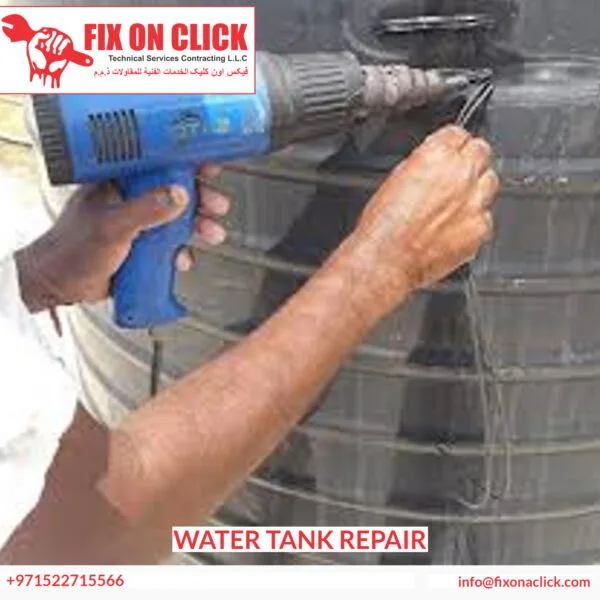
Concrete tanks crack over time as the structure settles and the reinforcement inside corrodes. Plastic and GRP tanks develop UV degradation, joint failures and stress cracks. Underground tanks face pressure from the ground around them and can develop slow seeps that are hard to notice until a larger area is affected.
A compromised tank does not just waste water. It can allow external contamination to enter the supply, create conditions for bacterial growth inside the tank, and — in the case of rooftop or overhead tanks — cause structural damage to the surface it sits on. The repair itself is usually straightforward when the fault is caught at the right stage. The cost of delaying tends to be significantly higher than the cost of fixing it when the problem is first identified.
Signs Your Water Tank Needs Repair
These are the most common indicators that something is wrong with your water tank. Some are obvious, others less so — all of them are worth taking seriously rather than waiting to see if they get worse.
Reduced Water Pressure
A noticeable drop in pressure at the taps — when the mains supply is fine — often points to a leak in the tank or its outlet pipes. The tank is not maintaining the level it needs to supply the property correctly.
Discoloured or Cloudy Water
Rust-coloured, brown or cloudy water coming from the taps indicates internal corrosion or sediment inside the tank. In concrete tanks this often means the internal lining or reinforcement has started to fail. In metal tanks it usually means corrosion has taken hold.
Visible Cracks or Damp Patches
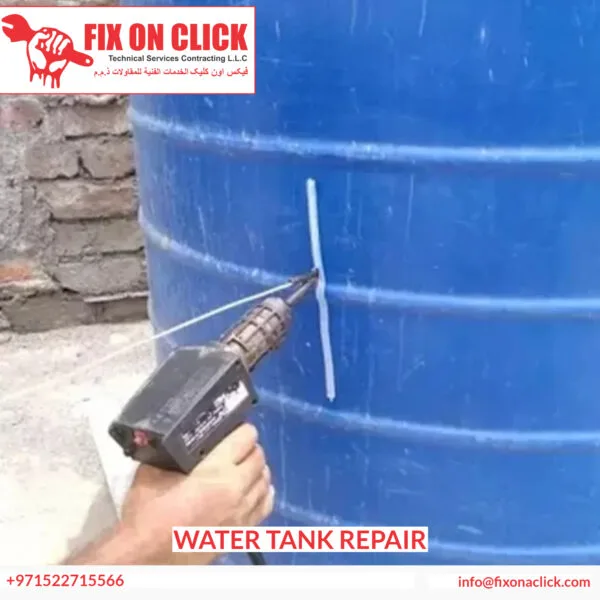
Cracks in the tank walls or base, or damp and stained surfaces around the tank, are the most direct signs of a structural or joint failure. Even a crack that appears dry on the surface may be seeping when the tank is full and under pressure.
Water Pooling Near the Tank
Water collecting around the base of a ground-level or rooftop tank — when it is not from rain or cleaning — indicates a leak at the base, a joint failure on an outlet connection or a crack in the lower section. Left unaddressed, this causes ongoing damage to the surface the tank sits on.
Unusual Sounds During Refilling
Gurgling, hissing or knocking sounds when the tank is filling can indicate air entering the system through a crack or joint, a faulty float valve, or internal corrosion that has changed the flow characteristics inside the tank. These sounds are worth investigating before they become a larger fault.
Rising Water Bills
A sudden increase in your water bill without a change in usage can indicate a tank that is not retaining water properly. Even a slow leak from a tank that continuously refills from the mains can add up to significant volumes and cost over a billing period.
Foul Smell or Taste in Water
An earthy, musty or chemical smell in the water supply from a stored tank can indicate algae growth, bacterial contamination or deterioration of an internal lining. This is a health concern that requires the tank to be drained, inspected, repaired and sanitised before being returned to use.
Tank Age — Over 10 Years
Most water tanks in Dubai have a practical service life of 10 to 15 years before the first significant maintenance or repair work is needed. A tank that has not been inspected or serviced in this period should be assessed proactively — catching early deterioration before it becomes a structural or contamination issue is considerably less disruptive than dealing with a major failure.
Water Tank Types We Repair
Different tank materials fail in different ways and need different repair approaches. Here is what is involved for each type found in Dubai's properties.
Concrete Water Tanks
Found in most older buildings and villas across Dubai. Concrete tanks are robust but crack over time as the structure settles — particularly around the base corners, inlet and outlet penetrations and the roof slab joint. Internal reinforcement corrosion can cause spalling that contaminates the water supply. Repairs range from crack stitching and surface sealant application to full internal waterproofing membrane relining and structural reinforcement for major damage.
Plastic & GRP Fiberglass Tanks
Widely used as rooftop and overhead tanks in Dubai's apartments and smaller commercial buildings. Plastic tanks are lightweight but degrade under UV exposure, developing stress cracks and joint failures particularly around fittings. GRP fiberglass tanks can delaminate when not properly maintained. Minor cracks and joint leaks are repaired with compatible materials and patch systems. Severely degraded tanks may need internal re-lining or replacement.
Underground Water Tanks
Found in larger villas, commercial buildings and residential compounds where rooftop space is limited. Underground tanks are subject to hydrostatic pressure from the surrounding soil, particularly in areas where the water table is higher. Seeping joints, penetration failures around pipes and structural cracks are the common faults. Detection requires specific methods — pressure testing, CCTV inspection or tracer gas for the feed and outlet pipes. Repair may involve excavation where the fault cannot be accessed internally.
Stainless Steel Tanks
Used where hygiene requirements are higher — hospitals, food preparation facilities and some high-end residential properties. Stainless steel tanks resist corrosion well but develop weld and joint failures over time, particularly at the base panel joints and around inlet and outlet fittings. Repair involves re-welding failed joints, replacement of faulty fittings and — where pitting corrosion has developed — section replacement. The tank is pressure-tested and sanitised after all weld work.
How We Repair Water Tanks
Every tank repair follows a consistent process — so you know what is happening at each stage and nothing starts until the cost is agreed.
Inspection
The tank is inspected internally and externally — checking for cracks, joint failures, corrosion, lining condition, fitting integrity and any structural concerns.
Drain & Clean
The tank is drained fully and the interior cleaned of sediment, algae and mineral deposits to allow accurate assessment of all surfaces before repair begins.
Quote Confirmed
A detailed repair scope and full cost is confirmed before any work starts. The method and materials are specified — nothing proceeds without your approval.
Repair Carried Out
The repair is completed using materials rated for potable water storage. Concrete tanks, plastic tanks and steel tanks each use the appropriate product for that material.
Test & Sanitise
The repaired tank is pressure-tested to confirm the repair holds, then sanitised with an approved solution before being refilled and returned to service.
Water Tank Repair Starting Prices
Transparent pricing — no hidden charges, no surprises. Final cost is confirmed after site inspection and before any work begins.
Concrete Water Tank
Fiber (Plastic / GRP) Tank
Underground Water Tank
Why Choose Fix On Click for Water Tank Repair?
Water tank repairs are not all the same — the right approach depends on the tank material, the nature of the fault and what the tank is used for. Getting it wrong means the problem comes back, or the repair material degrades and contaminates the supply.
All Tank Types Covered
Concrete, plastic, GRP fiberglass, stainless steel and underground tanks. Each type has specific failure modes and needs repair materials matched to the tank material. We do not apply a generic approach across different tank types.
Potable Water Safe Materials
Every sealant, coating, patch material and lining product we use is rated for potable water contact. Using the wrong material in a drinking water tank is a health risk. We do not use generic construction sealants on water storage repairs.
Drain, Repair, Sanitise
Every internal tank repair is followed by a full sanitisation before the tank is returned to service. The tank is not just fixed and refilled — it is cleaned and treated to food-grade standard after the repair work is complete.
Pressure Tested After Repair
We pressure test every tank after repair before it is refilled and returned to service. This confirms the repair holds under operating conditions — not just visually at the time of application.
Price Confirmed Before Work
After inspection, you receive the full repair scope and cost before anything starts. No additions are made without your approval. The pricing on this page gives you a realistic starting point.
Underground Fault Diagnosis
Underground tank detection requires pressure testing, internal inspection and in some cases tracer gas to locate the leak source before excavation is considered. We do not dig first and find the problem after.
60+ Vans Across Dubai
We have a van positioned in most areas of Dubai. For urgent tank faults — a significant leak or a tank that is contaminating the supply — we reach most locations within the hour.
Residential and Commercial
We handle tank repairs for apartments, villas, office buildings, hotels and larger commercial and industrial sites. The scale and complexity of the job dictates the team and equipment — both are available.
Water Tank Repair FAQs
Common questions about water tank repair in Dubai. Not covered here? Call us for a direct answer.
Call Fix On Click
Water Tank Leaking or Overdue for Repair?
Fix On Click repairs all types of water tanks across Dubai — concrete, plastic, fiberglass and underground. Transparent pricing, materials rated for potable water, pressure tested and sanitised before handover. Call us to arrange an inspection.