
HVAC Repair Near Jumeirah Islands Dubai
Jumeirah Islands is made up of clusters —Clusters A through F, each with its own style of villas and townhouses. The thing about this area is that most properties were built between 2003 and 2008, which means the AC systems are hitting that 15-20 year mark where things start going wrong. Not all at once, but steadily. One summer the compressor gets noisy. The next, the refrigerant needs topping up. Then the indoor unit starts leaking. It’s a pattern we’ve seen across enough Jumeirah Islands villas to know what to expect.
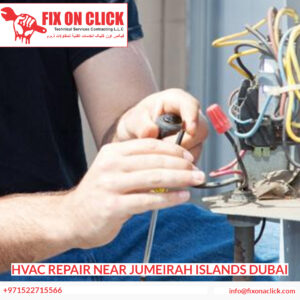
The villas here are mostly 4-5 bedroom standalone units with central ducted systems or multi-split setups. The townhouses in some clusters run on split units, one per floor. Each setup has its own weak points. Central systems suffer from duct leaks — the flexible ducting in the ceiling voids gets brittle after 15 years and starts splitting at the joints. Multi-splits have inverter boards that fail when they overheat, which happens a lot in Dubai summers when the outdoor unit sits in full sun. We’ve replaced enough inverter boards in Jumeirah Islands to know which clusters have the worst shading on their outdoor pads.
What Actually Fails in Jumeirah Islands ACs
The most common call we get from Jumeirah Islands is simple: “The AC is running but not cooling properly.” Nine times out of ten, it’s one of three things. First, the refrigerant charge is low. R410A systems — which most of these properties have — should run at about 120-150 psi on the low side during summer. When we connect gauges and see 80 psi, we know there’s a leak. Second, the condenser coils are clogged with dust. Jumeirah Islands has a lot of landscaping, which means pollen and fine dust get sucked into outdoor units. Third, the ducting has leaks, so the cold air never reaches the rooms.
Refrigerant leaks in these systems usually happen at the flare joints on the outdoor unit. The copper lines vibrate slightly when the compressor runs, and over 15 years that vibration loosens the flares. It’s a slow leak — you might not notice for months because the system still cools, just not as well. Your DEWA bill creeps up 200-300 dirhams, the rooms feel slightly warm in the afternoon, and you keep lowering the thermostat. By the time you call us, the compressor is running hot and the oil has started to break down. A simple flare re-seal and recharge costs 400-600 dirhams. A compressor replacement because you waited too long costs 3,000-5,000.
Then there’s the water leaking from indoor units. In Jumeirah Islands villas, the indoor units for central systems sit in ceiling voids above the bedrooms. The condensate drain runs down through the walls to the ground floor. When the drain line clogs — usually with algae and dust — the overflow pan fills and water starts dripping through the ceiling. We’ve had calls where the owner noticed a damp patch on the ceiling and thought it was a roof leak. It’s not. It’s the AC drain, and if you don’t fix it, the ceiling gypsum goes soft and the paint peels. The fix is a drain flush and pan clean, takes 30 minutes. The ceiling repair if you ignore it takes two days and costs ten times as much.
Central Systems vs. Splits — Different Problems
The central ducted systems in Jumeirah Islands villas are mostly Carrier or Trane units from the mid-2000s. They’re solid machines, but the ducting is the weak link. The original flexible duct has a foil outer layer and fiberglass insulation inside. After 15 years in a hot ceiling void, the foil cracks and the insulation compacts. Air leaks out into the ceiling space instead of reaching the rooms. We use a duct blaster to measure leakage — anything over 15% is worth fixing. We’ve seen villas where 30% of the cooled air was leaking into the ceiling. The owner kept turning the thermostat down, the compressor ran non-stop, and the electricity bill was astronomical. Sealing the ducts dropped their summer bill by 40%.
The multi-split systems — common in townhouses and some smaller villas — use inverter technology. The outdoor unit has one compressor that feeds multiple indoor heads. When the inverter board fails, the whole system stops. No cooling to any room. These boards are sensitive to heat and power surges, both common in Dubai. We carry replacement boards for common models — Daikin, Mitsubishi, LG — and can usually swap them same-day. But we also check why the board failed. If the outdoor unit is in full sun with no shade, it’ll overheat again. We sometimes recommend a simple shade structure or relocating the unit to a better-ventilated spot. It’s cheaper than replacing the board every three years.
VRF systems — variable refrigerant flow — are less common in Jumeirah Islands but show up in some of the larger villas that were upgraded. These are complex. Multiple outdoor units, dozens of indoor heads, electronic expansion valves, and a central control system. When a VRF system throws an error code, you need someone who understands the specific manufacturer’s protocol. We’ve dealt with VRF systems where the error code pointed to a refrigerant leak, but the actual problem was a failed sensor giving false readings. Chasing the wrong fault costs time and money. We always verify sensor readings with independent gauges before starting major work.
What Happens When You Call Us
We start with the basics. When did you first notice the problem? Is it all rooms or just some? Is the outdoor unit making noise? Has your DEWA bill changed? These questions tell us whether we’re looking at a refrigerant issue, a duct leak, an electrical fault, or something else. If only one room is warm, it’s probably a duct or zone damper problem. If the whole house is warm, it’s likely the compressor or refrigerant. If the outdoor unit is silent, we’re looking at electrical.
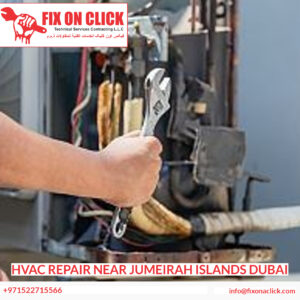
When we arrive, we check the filter first. Sounds obvious, but you’d be surprised how many “broken” ACs just need a filter clean. Then we check the thermostat — yes, people accidentally switch to heat mode. Then we move to the outdoor unit. We listen to the compressor, check the fan speed, and connect pressure gauges if needed. For central systems, we inspect the ducting in the ceiling void where accessible. For splits, we check each indoor head individually.
Once we know what’s wrong, we explain it in plain terms. No jargon, no upsell. If your refrigerant is low, we find the leak before recharging — topping up without fixing the leak is throwing money away. If your ducts are leaking, we show you the problem with a camera or smoke test. If your compressor is failing, we give you honest advice: repair or replace, with actual numbers for both options. We’ve told people to replace a 18-year-old unit instead of repairing it, because the repair would cost 60% of a new system and the old one would need more work within two years. Honesty saves everyone trouble.
Emergency Repairs — When the AC Dies in July
ACs fail when the load is highest — mid-July, 48 degrees outside, the unit has been running 16 hours a day. That’s when capacitors blow, contactors weld, compressors overheat, and refrigerant lines burst from pressure. We’ve had emergency calls from Jumeirah Islands at midnight, 2 AM, during Friday lunch. The pattern is always the same: the house is getting hot, the kids can’t sleep, and the owner is worried about the food in the fridge.
Our emergency team covers Jumeirah Islands around the clock. When you call, we ask the same diagnostic questions to gauge urgency. Complete power loss to the AC — tripped breaker, burning smell, or silent outdoor unit — gets priority. Reduced cooling but still running gets same-day service but not emergency rates. Fair is fair. We aim to be on-site within 90 minutes for emergencies. The van carries capacitors, contactors, fuses, refrigerant, and common spare parts for Carrier, Trane, Daikin, and Mitsubishi units. Most emergency calls are fixed in one visit.
For compressor failures or major refrigerant leaks, we can’t always complete the repair in one go. But we can usually restore partial cooling — maybe one or two zones — while ordering the major parts. Nobody should spend a July night in Dubai with zero cooling. We make sure you don’t.
Preventing Problems Before They Start
The villas that don’t call us for emergencies have one thing in common: regular maintenance. Not just filter cleaning — proper service. For Jumeirah Islands properties, we recommend twice-yearly maintenance: April before summer hits, and October after the heavy season ends.
The pre-summer service cleans coils, checks refrigerant charge, tests electrical connections, and inspects ducting. The post-summer service catches wear that happened during peak load — capacitors that are weak, contactors that are pitted, refrigerant leaks that started small. Fixing these in October means you’re ready for next summer. Ignoring them means a mid-July emergency call.
We also check the outdoor unit placement. Some Jumeirah Islands villas have the outdoor unit tucked in a corner with poor airflow. The unit recirculates its own hot air, runs inefficiently, and fails early. Moving it two meters or adding a ventilated enclosure can extend its life by years. It’s a simple observation that saves a lot of money.
Quick Questions We Get From Jumeirah Islands Residents
Why is my AC running but not cooling properly?
Most likely low refrigerant, dirty condenser coils, or duct leaks. We check all three. The refrigerant leak is usually at the outdoor unit flare joints — common in 15+ year old systems.
How often should I service my AC?
Twice a year in Dubai — April and October. Jumeirah Islands properties with central ducted systems especially need duct inspection, as the flexible ducting degrades over time.
My ceiling has a damp patch. Is this from the AC?
Probably. If the damp is below an indoor unit or near a duct run, it’s likely a clogged condensate drain. The overflow pan fills and water seeps through. Quick fix if caught early — drain flush and pan clean.
Should I repair or replace my old AC unit?
If it’s over 15 years, needs refrigerant every summer, or your bills keep climbing, replacement usually makes sense. New inverter systems use 40-50% less power. We run the numbers based on your actual usage.
Do you handle emergencies at night?
Yes, 24/7. Emergency rates apply after hours, but we tell you the cost before dispatching. Most Jumeirah Islands emergency calls are capacitor failures, contactor issues, or refrigerant leaks — usually fixed in one visit.
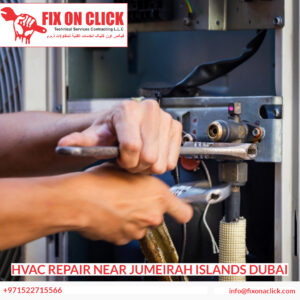
If your AC isn’t keeping up, making noise, or just not right, give us a call. We’ll come out, diagnose it properly, and tell you exactly what needs doing — whether it’s a 30-minute clean or a full system replacement. No upsell, no jargon, just honest work from people who know Jumeirah Islands’ ACs inside out.