
Water Leak Repair Near Jumeirah Heights Dubai
Most people ignore these signs. They hope it sorts itself out. It doesn't.
We fixed a leak last month in Jumeirah Heights — the owner noticed a small stain on the ceiling six weeks earlier. By the time we opened the wall, the plaster behind it had turned to mush. The repair cost him three times what it would have if he'd called when he first saw the stain.
If something feels off in your Jumeirah Heights property, Fix On Click can check it, locate the source, and repair it. We cover the whole community.

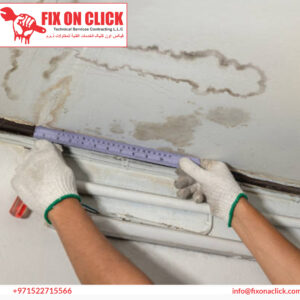
Water leak repair in progress — Fix On Click technician at work
Why Leaks in Jumeirah Heights Stay Hidden for So Long
The plumbing in Jumeirah Heights properties runs behind walls, beneath tiles, and through ceiling cavities. Clean finishes, no exposed pipes — which is fine until something starts leaking.
Then the water sits inside the structure with nowhere obvious to go. It spreads slowly through plaster and insulation before it ever breaks through to the surface.
When it finally does show, the damage behind the wall is usually already significant. Softened plaster, lifted tiles, paint that bubbles off without touching it. In some cases the moisture gets into electrical conduits — that's when a plumbing problem becomes a safety issue.
The climate here accelerates things too. Pipes and joints that expand and contract through Dubai summers and winters eventually develop small cracks and gaps. Units that are five or more years old and haven't had any plumbing checks done are where we see this most often.
What a Leak Is Actually Doing to Your Property
Water moves through whatever it can — grout lines, pipe channels, cavity insulation. A leak that started at one point in a wall can spread two or three meters before showing up on the surface somewhere else entirely. By the time mold appears, it's usually well-established behind the wall, not just on it.
Mold affects air quality. In enclosed apartments, that matters. Residents with asthma or allergies notice it quickly. Children are more sensitive to it. And removing mold from inside a wall cavity means opening up that wall — which is a significantly bigger job than the original leak repair would have been.
On the utility side — a leaking supply pipe loses water continuously, not just when taps are running. A few hundred litres a day is normal for a mid-sized pipe joint failure. Check your DEWA consumption history if your bill has gone up and you haven't changed your usage.
How We Locate and Repair the Leak
Before anything is opened up, we find exactly where the leak is. This matters because cutting into the wrong section of wall — which happens more than it should in this industry — means unnecessary damage and it still doesn't fix the problem.
We use three tools for detection:
Thermal imaging cameras show temperature differences on wall and ceiling surfaces. Where water is escaping from a pipe behind a wall, the surface temperature changes — the camera picks that up even when nothing is visible to the eye.
Acoustic sensors detect the sound of pressurized water moving through a crack or gap inside a pipe. This works through concrete floors and thick walls where other methods can't reach.
Moisture meters measure how far dampness has already spread through the surrounding material — useful for understanding how much of the wall or floor has been affected, not just where the leak started.
Once the location is confirmed, the repair itself is usually straightforward — resealing a joint, replacing a damaged section of pipe, or fixing a failed fitting. If wall access is required, we open only what's necessary. After the repair, pressure testing confirms the system is holding before we close anything up.
Thermal imaging camera used for non-invasive water leak detection
What Residents Here Say About Working With Us
The thing people mention most is that we explain the job before we start it — what we found, where the leak is, what the repair involves, and what it costs. A lot of residents have called us after a previous company came, did something, charged them, and left without properly explaining any of it.
Pricing is fixed before we begin. If the repair turns out to involve something unexpected, we stop and discuss it — we don't just continue and add it to the bill afterward.
Response time: For an emergency water leak, we're available day and night. For booked appointments, we show up at the agreed time. Residents in Jumeirah Heights have busy schedules — a vague four-hour window doesn't work for most people, and we don't operate that way.
Plumbing Checks Before Something Goes Wrong
If your unit is older and hasn't had any plumbing work looked at recently, a check is a reasonable thing to do. We look at pipe joints, pressure levels, seals around fixtures, and anywhere showing early moisture that hasn't turned into a visible leak yet.
Post-renovation properties are particularly worth checking. Fittings that weren't seated correctly during a fit-out are one of the most common sources of slow leaks we find in Jumeirah Heights — and catching it six months in is far less costly than finding it two years later when the damage is done.
Our preventive plumbing check covers a full system inspection with a written report of anything flagged.
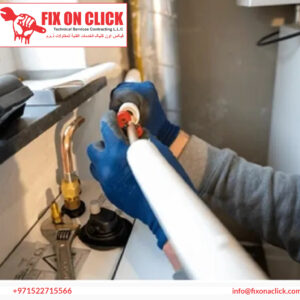
Completed water leak repair in a Jumeirah Heights apartment
FAQs — Water Leak Repair Near Jumeirah Heights Dubai
My DEWA bill went up but there's no visible leak anywhere. Could it be a pipe issue?
Very likely yes. Supply line leaks inside walls or under floors often don't reach the surface for weeks or months. Check your DEWA consumption breakdown — if usage has gone up without any change in habits, that's a strong indicator. We can run a check and confirm.
Do you have to open the walls to find the leak?
Usually not at the detection stage. Thermal imaging and acoustic sensors let us locate the leak through the wall surface without breaking anything. If access is needed for the repair, we only open what's necessary — and only after we've confirmed exactly what's there.
How soon can you reach a property in Jumeirah Heights?
For urgent leaks, we aim to be there within a few hours. Our team knows the area and the building layouts here, which cuts down on time once we arrive. For scheduled jobs, we book a specific time — not a wide window.
The water seems to be coming from upstairs, not my own pipes. Can you still help?
Yes. We assess where the water is entering your unit and trace it back to where it originated — your property or the one above. We document everything clearly, which is useful if building management or the neighbouring unit needs to be involved.
Do you work in villas as well as apartments?
Yes — apartments, villas, and commercial units across Jumeirah Heights. The detection approach is the same across property types.
What does the repair cost?
It depends on the leak location and what the repair involves. We give you a confirmed price before starting anything. Call us, describe what you're seeing, and we'll give you a realistic estimate on the spot.
To book an inspection or report an emergency leak, call Fix On Click directly. We're available 24 hours a day.
Got a Leak? Don't Wait.
Every day you wait, the damage gets worse. Call now and we'll be there within hours.
📞 Call +971522715566